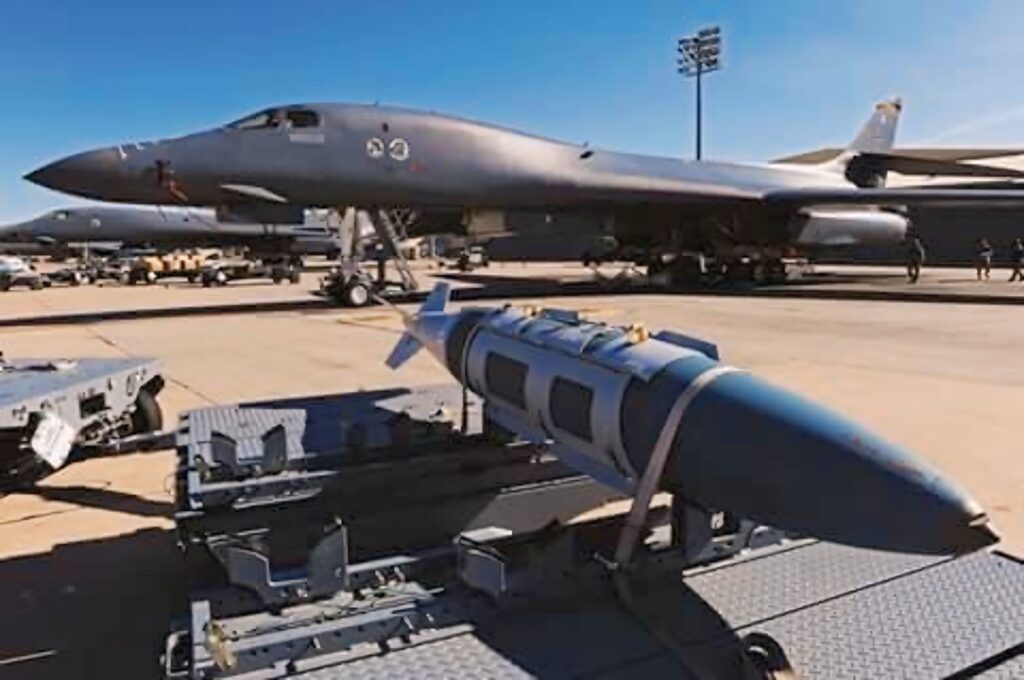
The B-1B Lancer has long been tied to the identity and mission of the 28th Bomb Wing, headquartered at Ellsworth Air Force Base in South Dakota. For decades, the wing has operated the aircraft as one of the Air Force’s primary long-range strike forces, carrying out a mix of training, deterrence and combat missions. The relationship between the aircraft and the wing is more than organizational. It reflects a shared evolution shaped by global demands, technological updates and the shifting nature of modern warfare.
When the 28th BW transitioned to the B-1B in the early 1990s, it marked a major shift away from its historic focus on earlier generations of strategic bombers. The Lancer’s blend of speed, payload and variable-sweep wing design gave the wing a platform capable of operating at low altitude, penetrating contested airspace and delivering a wide range of conventional munitions. Although the aircraft was originally conceived as a nuclear-capable bomber, its mission under the 28th BW eventually centered on precision conventional strike. This shift aligned closely with the U.S. military’s changing strategy after the Cold War.
Through the following decades, aircrews, maintainers and support personnel at the 28th BW built deep expertise with the B-1B. The aircraft requires skilled handling, especially given its mechanical complexity and the demands of high-tempo operations. The wing maintained its readiness through continuous training, including long-range sorties, integrated exercises with joint partners and deployments across the globe. These efforts allowed the wing to deliver combat power rapidly whenever needed.
The B-1B became a regular presence in U.S. operations in the Middle East, where it proved valuable for sustained strike missions. Crews from the 28th BW flew long-endurance sorties supporting ground forces, often carrying large numbers of guided weapons. The Lancer’s ability to loiter, reposition quickly and strike multiple targets in a single mission made it a reliable workhorse. Years of deployment cycles sharpened the wing’s operational instincts and reinforced the aircraft’s reputation for flexibility.
Technical improvements also shaped the wing’s relationship with the bomber. Upgrades to avionics, targeting systems and communications allowed the B-1B to integrate more effectively with modern networks and precision weapons. Although the jet’s airframe dates back several decades, these updates kept it relevant and useful during a period when strategic bombers were expected to bridge old designs with new requirements.
The 28th BW’s role has always extended beyond flying the aircraft. The wing serves as a training and development hub, building the next generation of bomber aircrews and maintainers. This responsibility requires a balance between preserving hard-earned experience and adapting to new approaches in strike operations. The culture surrounding the B-1B at Ellsworth is shaped by a sense of professionalism, steady pressure and pride in accomplishing challenging missions far from home.
Even as the Air Force continues shifting toward advanced systems, the history between the B-1B and the 28th BW remains significant. The partnership reflects years of operational demand, adaptation and commitment. For the wing, the aircraft has been more than a platform. It has been the core of its mission and identity, shaping the people who flew it, maintained it and relied on it to project power whenever called.