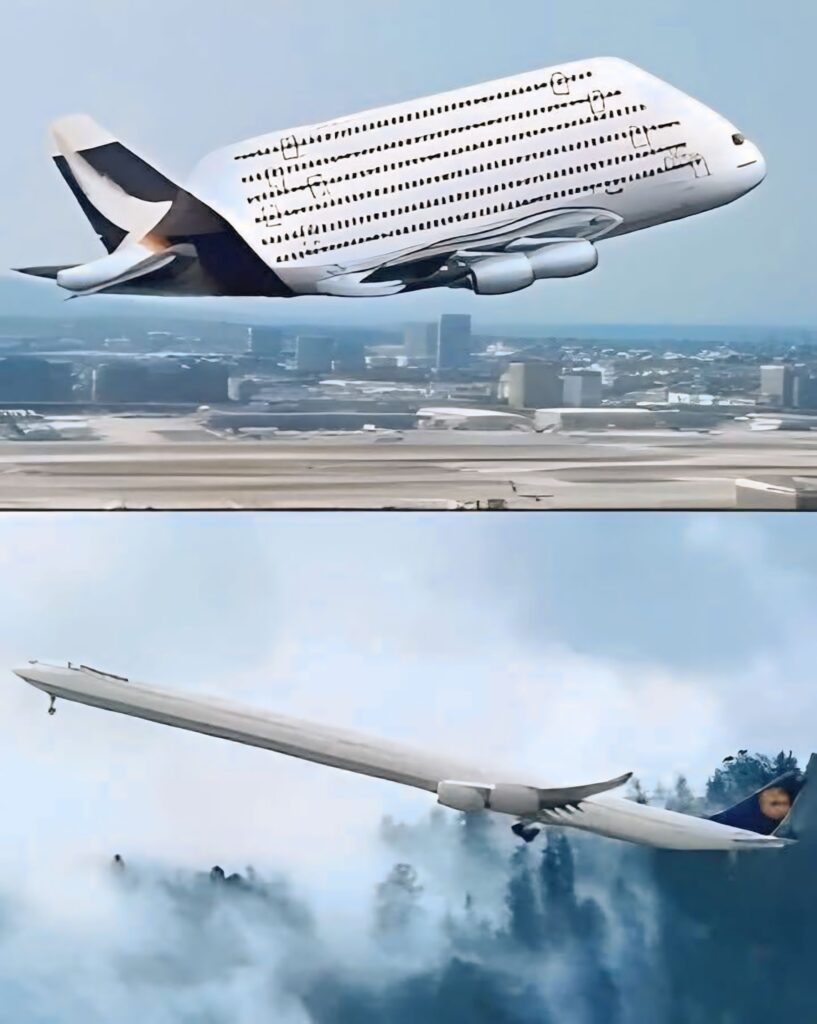
When people first encounter an image or model of an Airbus A380 that looks “off,” the reaction is often a mix of curiosity and confusion. The A380 has such a familiar shape that even small changes stand out. Its oversized wings, the full-length upper deck, and the four-engine layout make it one of the most recognizable aircraft in the world. When those elements look warped or exaggerated, the mind immediately senses that something is not quite right.
A distorted version of the A380 can come from several sources. Digital edits are one of the most common. Stretching the fuselage, enlarging the engines or compressing the wings can completely change the proportions. Even a slight change in aspect ratio can make the aircraft look strangely long or unusually squat. The aircraft’s real dimensions are carefully balanced, so when those proportions are altered, the distortion becomes obvious.
Another source of distortion is perspective. A380 photos taken with wide-angle lenses can make the nose bulge more than it should or make the wings appear to curve unnaturally. The A380 already has a distinct nose profile and large wings, so an uncommon angle can exaggerate those features. If the shot is taken from below the aircraft, the fuselage and belly fairing can appear heavier than they truly are. If it is taken from above, the wings can seem too broad or swept farther than they are.
Models and drawings can also introduce unusual variations. Artists sometimes create stylized interpretations, intentionally altering shapes to emphasize size or make the aircraft look more futuristic. Some aviation enthusiasts create fictional liveries or concept designs that play with the A380’s form. When these are not labeled as artistic versions, viewers may assume they are seeing a real aircraft that looks strangely deformed.
There is also the possibility of a physical distortion in the capture process. Reflections on curved surfaces, such as airport windows, can bend straight lines into arcs. Heat waves rising from the ground can ripple the appearance of an aircraft on hot days. In motion, long-exposure images may stretch or blur features until the aircraft appears almost surreal.
Despite the distortions, many of the A380’s signature traits usually remain visible. The two passenger decks are often noticeable through the window layout. The distinctive wing root fairing, which is large to support the aircraft’s immense wings, still hints at its identity. The four engines spaced along the wings help confirm that the viewer is looking at a widebody quadjet, a category with very few members today.
Recognizing a distorted A380 becomes a small exercise in observation. Once the mind identifies the familiar features buried inside the stretched or warped shape, the rest of the image makes more sense. Even when presented in an altered form, the aircraft’s character is hard to hide.
The interest in these distorted views comes from how strongly people associate the A380 with its natural proportions. It is a symbol of size, engineering achievement and long-haul travel. When those proportions shift, even slightly, the brain notices and tries to reconcile what it sees. That reaction is part of what makes distorted images of the A380 so intriguing to examine and interpret.