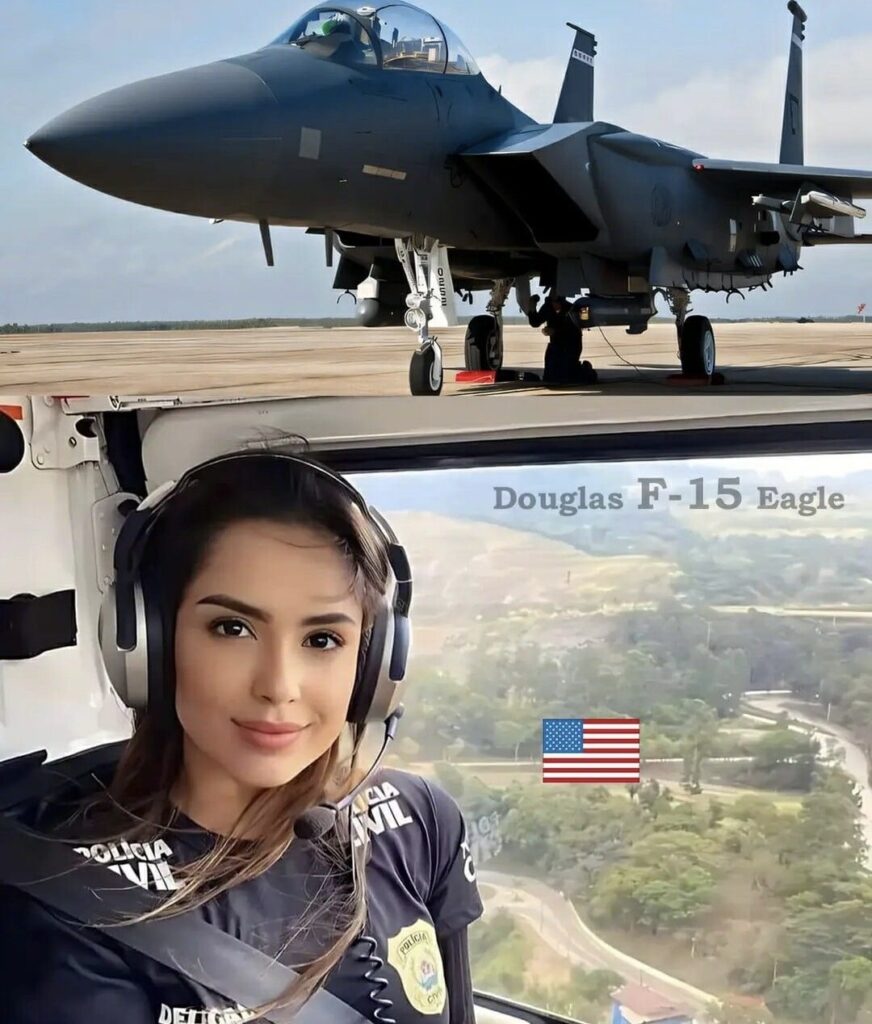
The McDonnell Douglas F-15 Eagle is one of the most recognizable and respected fighter aircraft ever built. Developed in the early 1970s, it was created to give the United States clear air superiority at a time when new Soviet designs were raising concerns. Engineers focused on raw performance, advanced radar capability, and the ability to win air-to-air battles even in difficult conditions. The result was a twin-engine fighter that quickly earned a reputation for power, reliability, and precision.
At the heart of the F-15’s design is its combination of speed and maneuverability. Its two Pratt & Whitney engines give it enough thrust to climb rapidly and reach speeds above Mach 2.5. Even with that power, the aircraft maintains excellent control at a wide range of speeds. Pilots often point out that the F-15 feels responsive and predictable, which is essential during tight maneuvers and high-stress combat situations. The aircraft’s large wings and lightweight materials played a major role in achieving this balance.
Another defining feature is its radar and weapons systems. When it first entered service, the F-15 carried a radar that could track multiple targets at long range, which was a significant leap over earlier fighters. This allowed pilots to find and engage opponents before being detected. The aircraft can carry a mix of air-to-air missiles, including variants of the AIM-7, AIM-9, and AIM-120, along with a 20 mm cannon. This versatile loadout lets the Eagle perform both long-range engagements and close-in dogfights with confidence.
The F-15’s combat record is central to its legacy. It is widely cited as having one of the best air-to-air records in modern aviation, with scores of confirmed victories and no losses in air combat when flown by the United States or its allied operators. Much of this success stems from a mix of pilot training, aircraft performance, and constant upgrades. Over the years, the Eagle has received updates to its radar, avionics, cockpit displays, and weapons integration, keeping it competitive even as new fighters emerged.
As time went on, new versions of the F-15 were developed to handle additional missions. The F-15E Strike Eagle is the most notable of these variants. While the original F-15 focused solely on air superiority, the Strike Eagle adds the ability to conduct deep strike missions, carrying bombs and advanced sensors while maintaining strong air-to-air capability. This version became a key asset for precision strike operations and is still widely used today.
Even with the arrival of stealth aircraft such as the F-22 and F-35, the F-15 continues to serve. Boeing, which absorbed McDonnell Douglas, has introduced updated models like the F-15EX. These versions feature modern avionics, improved electronic warfare suites, and increased payload capacity. They are designed to work alongside newer stealth fighters, providing high speed, heavy weapons loads, and long range when stealth is not required.
After more than five decades, the F-15 remains an aircraft that commands respect. Its blend of power, agility, and adaptability has allowed it to stay relevant far longer than originally expected. For many countries and pilots, the Eagle is more than a machine. It is a symbol of air superiority and a benchmark in fighter design.