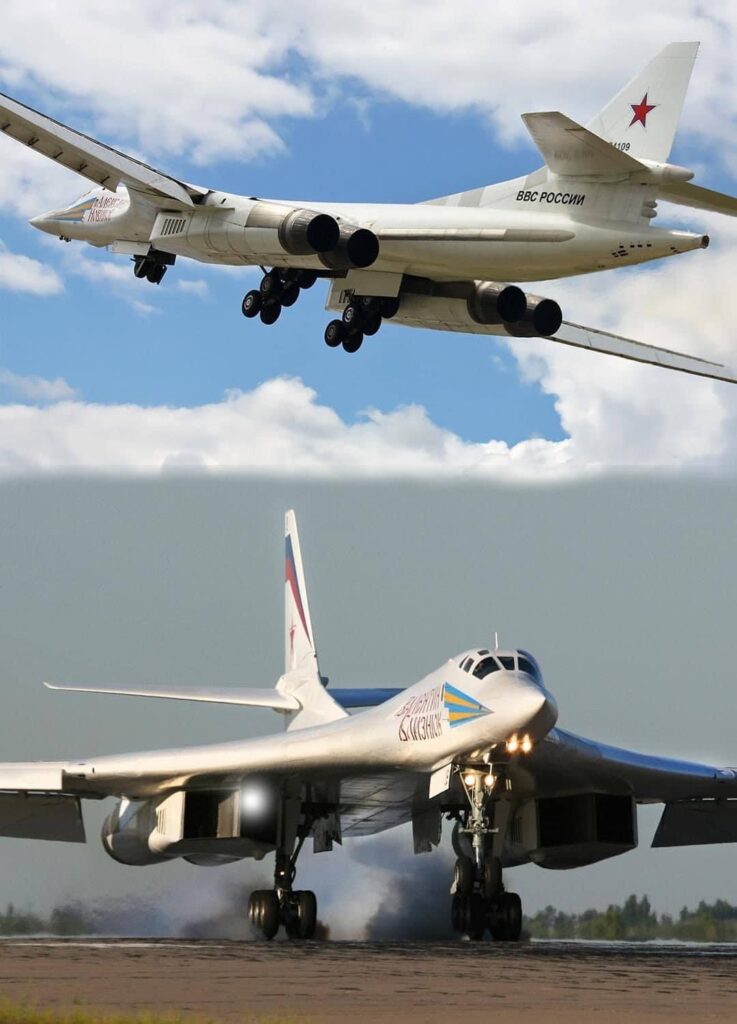
The Tu-160 is one of the most recognizable aircraft in long-range aviation, and the term AIZ is often used in reference to its role within aerospace and industrial zones that support heavy military aviation. While the Tu-160’s reputation focuses on its presence as a strategic bomber, understanding it through the lens of AIZ adds another layer, because it places the aircraft within the wider ecosystem that maintains, upgrades, and prepares it for service.
The Tu-160 was developed by the Soviet Union as a high-speed, long-range bomber capable of delivering significant payloads over intercontinental distances. Even today, it remains the largest and heaviest supersonic bomber in active service. Its signature feature is its variable-sweep wings. This design gives it the flexibility to operate efficiently at high speeds while still managing stable flight during takeoff, landing, and lower-speed cruising. The combination of powerful engines, aerodynamic shaping, and adjustable wing geometry lets the aircraft fly faster than many fighter jets at altitude.
When people talk about the Tu-160 in the context of an AIZ, they are usually pointing to the specialized support systems that surround it. An aircraft of this scale does not operate independently. It relies on a network of manufacturing plants, testing facilities, and technical zones capable of handling strategic aviation. These zones include dedicated areas for propulsion testing, airframe work, avionics calibration, and weapons integration. They also provide the space and structure not just for routine maintenance but for modernization programs that keep the aircraft relevant decades after its original introduction.
The Tu-160’s place within an AIZ highlights how complex its upkeep is. Crews work through layered inspection cycles, and each cycle involves teams with different specialties. Engines are treated as their own projects, and the electronic suites are updated periodically to match new mission requirements. Structural elements, especially in a variable-geometry aircraft, must be checked and recalibrated on a schedule that leaves no room for shortcuts. This environment creates a rhythm where the aircraft moves between operational duty and maintenance intervals supported by industrial zones designed around strategic aviation.
In modern use, the Tu-160 still represents long-range strike capability. Its mission profile usually focuses on delivering cruise missiles from distances that keep it beyond reach of frontline defenses. Because of this, the systems installed on the aircraft must be continuously evaluated and integrated within the broader command and control structure. The AIZ concept helps frame how these upgrades are carried out. It places the aircraft inside a cycle of design, testing, refinement, and deployment that extends far beyond the flight line.
How the Tu-160 interacts with an AIZ also reflects broader trends in military aviation. Fleets are kept active longer, technology is retrofitted rather than replaced, and industrial zones evolve to support both legacy and next-generation aircraft. The Tu-160 remains a strong example of this pattern. Even as newer technologies emerge, the aircraft continues to be supported by zones built to sustain its role as a strategic asset.