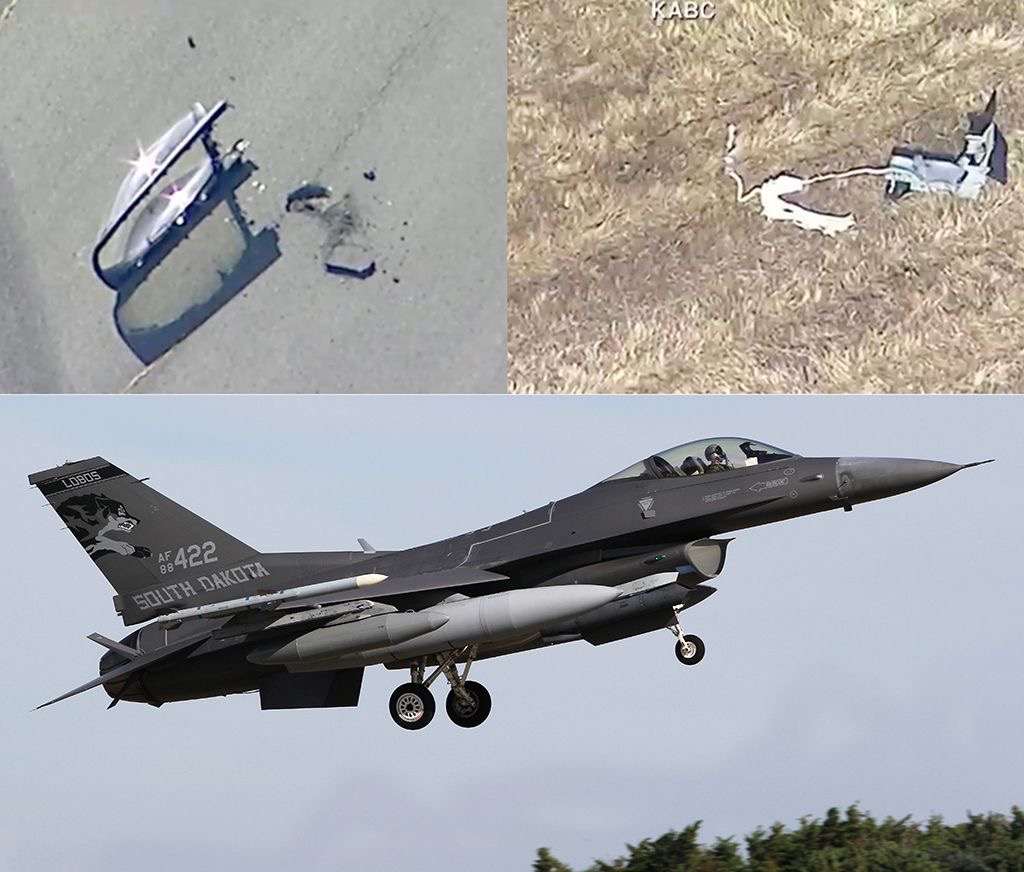
F-16 of the SD ANG landing at RAF Lakenheath in 2016 and the F-16’s jettisoned canopy, ejection seat and the pilot’s parachute that could be seen in local news helicopter video. (Photos: The Aviationist/Tony Lovelock and screenshots via NBC News)
In June 2016, an F-16 Fighting Falcon assigned to the South Dakota Air National Guard made an emergency landing at RAF Lakenheath in the United Kingdom, drawing immediate attention from both military observers and the local public. The incident unfolded quickly and was later documented through a combination of ground photography and aerial footage captured by a local news helicopter. Together, these images provided a rare and revealing look at the sequence of events that followed a serious in flight emergency.
The aircraft had been operating as part of a deployment to Europe, where Air National Guard units regularly train alongside NATO partners. During the flight, the pilot encountered a malfunction that made continued normal operation unsafe. As procedures dictate in such situations, the pilot initiated emergency actions that included jettisoning the canopy and ejecting the seat. These steps are designed to give the pilot the best possible chance of survival if abandoning the aircraft becomes necessary. In this case, the pilot successfully separated from the jet and deployed a parachute.
What made this incident especially notable was the visual trail it left behind. Video from a local news helicopter showed the jettisoned canopy, the ejection seat, and the pilot’s parachute descending separately over the English countryside. Such footage is rarely seen outside of training ranges or combat zones. For aviation enthusiasts and the general public alike, it offered a stark reminder of how quickly a routine mission can turn into a life threatening situation.
Despite the severity of the emergency, the outcome was ultimately positive. The pilot survived and was recovered without serious injury. The F-16 itself, although damaged, came down at RAF Lakenheath rather than in a populated area. This was due in part to the aircraft’s design and the training of its aircrew. Modern fighter jets like the F-16 are built with multiple safety systems, and pilots rehearse emergency procedures repeatedly throughout their careers.
Photographs credited to The Aviationist and Tony Lovelock documented the aircraft on the ground after the incident, while screenshots from NBC News captured the airborne debris and parachute. Together, these images created a comprehensive visual record that complemented official statements released afterward. They also fueled discussion within the aviation community about emergency response, aircraft reliability, and the realities of operating high performance military jets far from home bases.
The 2016 RAF Lakenheath incident remains a powerful example of both the risks inherent in military aviation and the effectiveness of established safety protocols. While dramatic, it ended without loss of life, underscoring the importance of training, preparation, and cooperation between allied forces.