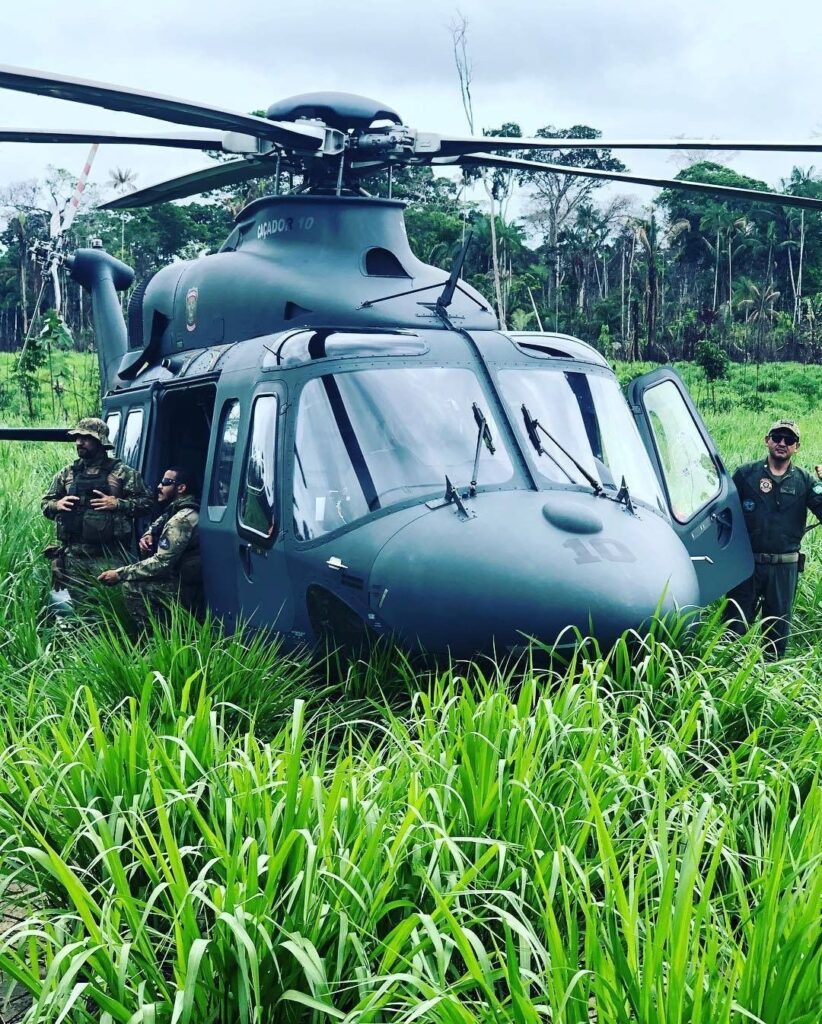
The AW139 is a medium twin engine helicopter that has earned a strong reputation for reliability, performance, and versatility. Developed by Leonardo Helicopters, formerly AgustaWestland, it is used worldwide by military forces, government agencies, emergency services, and commercial operators. Since entering service in the early 2000s, the AW139 has become one of the most successful helicopters in its class.
One of the defining features of the AW139 is its powerful propulsion system. It is equipped with two Pratt and Whitney Canada PT6C engines, which provide excellent performance and redundancy. This twin engine configuration improves safety, especially during offshore operations, night flying, or missions over hostile terrain. The helicopter is capable of cruising at speeds of around 165 knots and has a maximum range of roughly 570 nautical miles with auxiliary fuel tanks installed. These figures make it well suited for long range transport and search and rescue missions.
The airframe design emphasizes stability and efficiency. The AW139 uses a five blade main rotor and a four blade tail rotor, both made from advanced composite materials. This design reduces vibration, improves ride quality, and lowers maintenance demands. The helicopter also features a fully retractable tricycle landing gear, which enhances aerodynamic efficiency and contributes to its high cruise speed compared to other helicopters in its category.
Inside the cockpit, the AW139 offers a modern and pilot friendly environment. It is equipped with a full glass cockpit, typically featuring four large multifunction displays. These displays provide flight, navigation, and engine data in a clear and organized manner. Advanced avionics options include a digital automatic flight control system, terrain awareness and warning systems, and night vision goggle compatibility. These systems reduce pilot workload and support safe operations in demanding conditions.
Cabin flexibility is another major strength of the AW139. The spacious cabin can be configured for a wide range of roles, including passenger transport, medical evacuation, law enforcement, and military utility missions. Depending on the layout, it can carry up to 15 passengers, or a combination of crew, patients, and equipment. Large sliding doors on both sides and a rear baggage compartment allow for quick loading and unloading, which is critical during emergency operations.
From a maintenance and operational perspective, the AW139 was designed with efficiency in mind. Its systems are modular, allowing faster inspections and component replacement. Operators benefit from high dispatch reliability and strong global support, backed by Leonardo’s extensive service network. This has made the AW139 a popular choice for operators who require high availability and predictable operating costs.
Overall, the AW139 stands out as a balanced and capable helicopter that bridges the gap between light and heavy medium platforms. Its combination of speed, range, safety features, and mission flexibility explains why it continues to be widely adopted across both civilian and military sectors around the world.