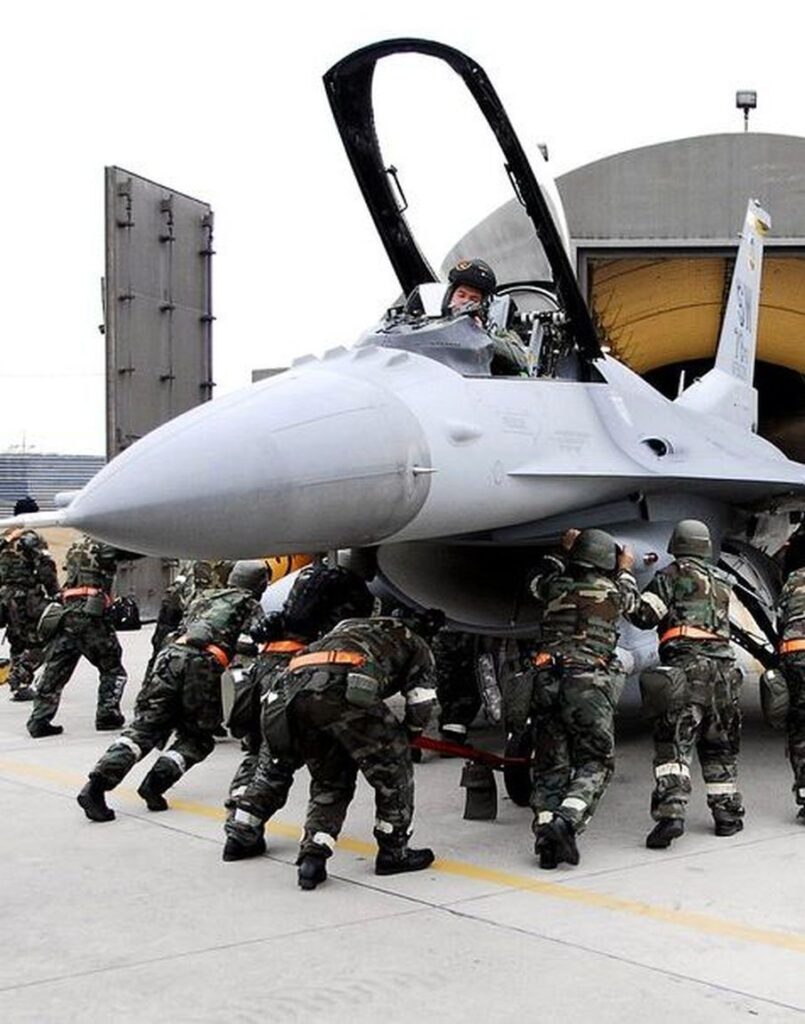
The F-16 Fighting Falcon is one of the most successful and widely used multirole fighter aircraft in modern military aviation. Designed in the 1970s by General Dynamics and later produced by Lockheed Martin, the aircraft was originally conceived as a lightweight air superiority fighter. Over time, it evolved into a highly adaptable platform capable of performing a wide range of combat missions. Today, the F-16 remains in active service with air forces across the globe.
A defining characteristic of the F-16 is its emphasis on pilot visibility and maneuverability. The aircraft features a frameless bubble canopy that provides excellent all around vision, which is critical during air to air combat. Its side mounted control stick and reclined seating position reduce pilot fatigue and allow greater tolerance to high G forces. Combined with a relaxed static stability design and fly by wire flight controls, the F-16 delivers exceptional agility and responsiveness.
Powering the F-16 is a single turbofan engine, either the Pratt and Whitney F100 or the General Electric F110, depending on the variant. These engines provide strong thrust to weight performance, enabling the aircraft to reach speeds exceeding Mach 2 at altitude. The engine choice also supports rapid acceleration and impressive climb rates, both essential for air combat and interception missions.
The F-16’s versatility is one of its greatest strengths. It can carry a wide variety of weapons across multiple hardpoints, including air to air missiles, guided and unguided bombs, and precision strike munitions. This allows the aircraft to perform missions such as air defense, close air support, suppression of enemy air defenses, and deep strike operations. Its internal M61 Vulcan 20 mm cannon adds a reliable close range weapon for both air and ground targets.
Avionics upgrades have kept the F-16 relevant well into the modern era. Later variants feature advanced radar systems, including active electronically scanned array options, improved electronic warfare suites, and modern mission computers. These enhancements allow the aircraft to detect, track, and engage threats at greater ranges while operating effectively in contested environments. Compatibility with modern data links also enables seamless coordination with other aircraft and ground forces.
From a maintenance and cost perspective, the F-16 has proven to be an efficient platform. Its relatively simple design and single engine layout reduce operating costs compared to heavier fighters. This affordability, combined with strong combat performance, has made the F-16 attractive to both large and smaller air forces. More than 4,500 units have been built, and the aircraft has seen combat in numerous conflicts, demonstrating its reliability under real world conditions.
In summary, the F-16 Fighting Falcon represents a balance of performance, flexibility, and cost effectiveness. Its ability to adapt to evolving mission requirements has ensured its continued relevance decades after its introduction. As modernization programs continue, the F-16 is expected to remain a cornerstone of many air forces well into the future.