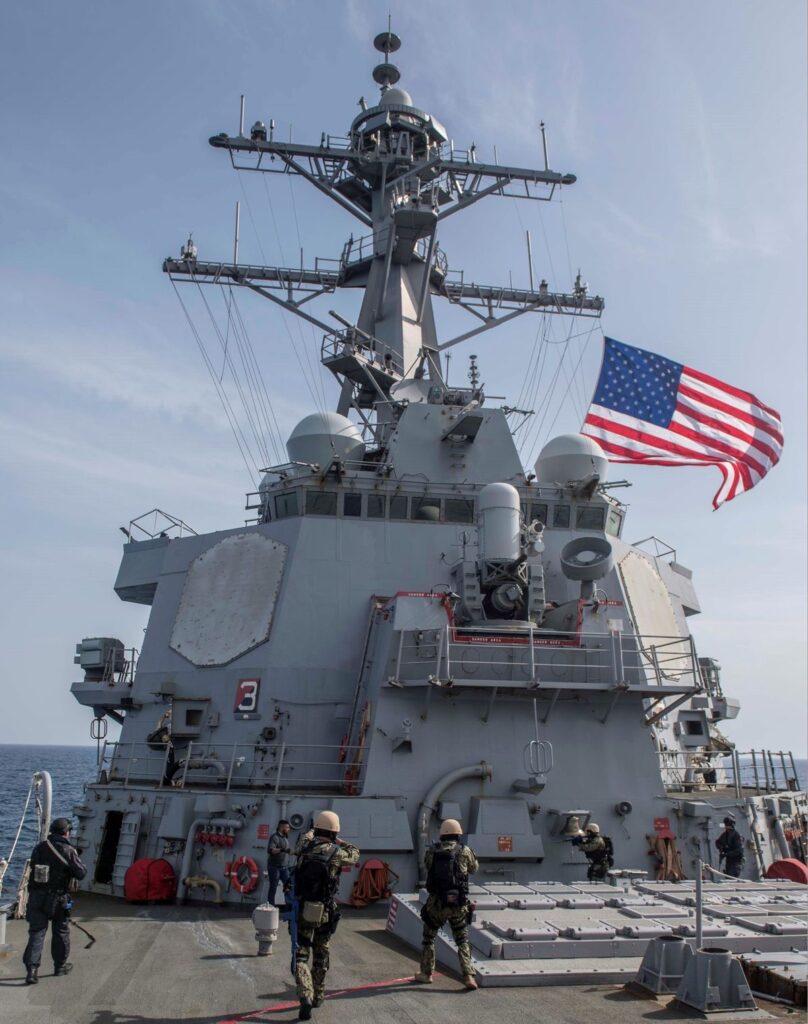
The USS Arleigh Burke (DDG-51) is the lead ship of the Arleigh Burke-class guided missile destroyers and one of the most influential surface combatants ever built for the United States Navy. Commissioned on July 4, 1991, the ship represents a major leap in naval technology, survivability, and combat capability. Named after Arleigh Burke, a legendary World War II destroyer commander and later Chief of Naval Operations, the vessel continues a proud tradition of excellence in the U.S. fleet.
Built by Bath Iron Works in Maine, USS Arleigh Burke was designed during the final years of the Cold War when the Navy required a highly capable multi-mission destroyer able to defend fleets against air, surface, and submarine threats. The result was a warship that combined advanced sensors, powerful weapons systems, and a hull design focused on survivability and reduced radar signature.
One of the defining features of the ship is the Aegis Combat System, an advanced integrated naval weapons system that uses powerful radar and computers to track and engage multiple threats simultaneously. Central to this system is the SPY-1 phased-array radar, which allows the destroyer to detect and monitor aircraft and missiles hundreds of miles away. This capability makes the ship a key component of modern naval air defense.
The USS Arleigh Burke is also equipped with the Mk 41 Vertical Launching System, a deck-integrated missile launcher that can fire a wide variety of weapons. These include Tomahawk cruise missile for long-range land attack, Standard Missile for air defense, and anti-submarine rockets used to target hostile submarines. This flexible missile system allows the ship to perform multiple combat roles without requiring major modifications.
In addition to missile armament, the destroyer carries a five-inch naval gun capable of engaging surface targets and providing naval gunfire support to forces ashore. The ship also features torpedo launchers for anti-submarine warfare and a flight deck designed to support naval helicopters, which extend the ship’s surveillance and strike capabilities far beyond the horizon.
Survivability was a major priority in the design of the Arleigh Burke. Unlike earlier destroyers that used aluminum superstructures, DDG-51 was constructed primarily with steel to improve resistance to battle damage and fire. The ship also incorporates advanced damage control systems and protective measures intended to allow it to remain operational even after sustaining significant combat damage.
Throughout its service, USS Arleigh Burke has participated in numerous training exercises, deployments, and operational missions around the world. As the first ship in a class that would eventually include more than 70 destroyers, it helped set the standard for modern U.S. Navy surface warfare.
Today, the legacy of USS Arleigh Burke lives on not only through its continued service but also through the many destroyers of the same class that patrol the world’s oceans. These ships form the backbone of the U.S. Navy’s surface fleet, carrying forward the advanced technologies and combat capabilities first demonstrated by DDG-51. 🚢