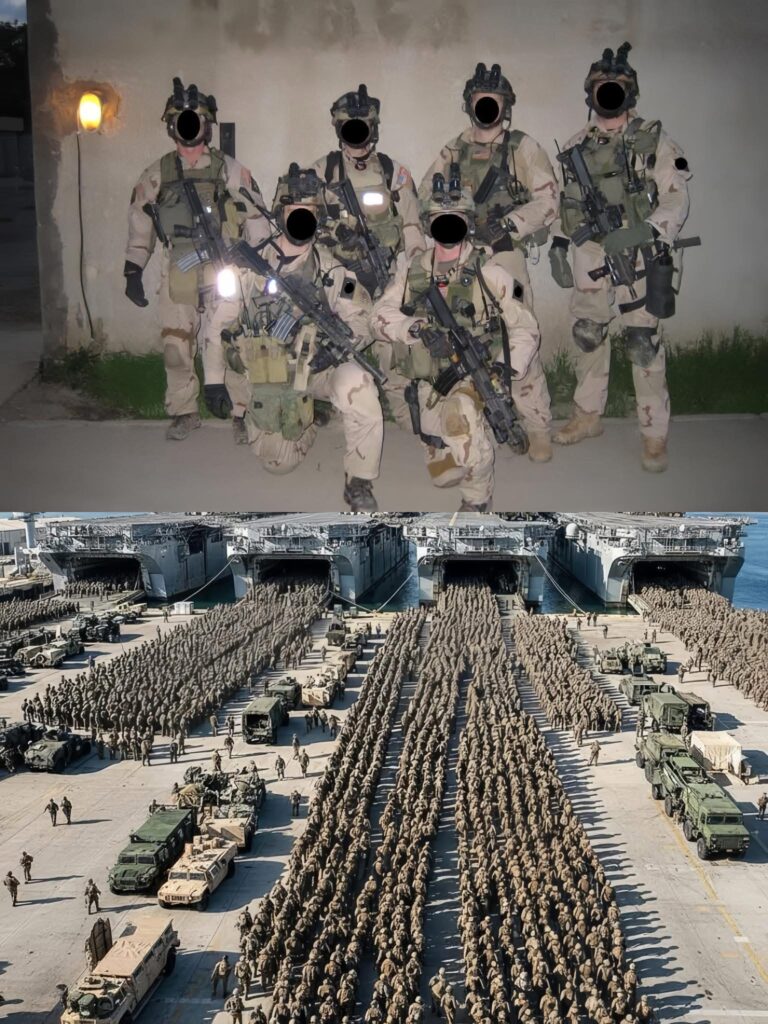
Tensions in the Middle East have surged to dangerous levels as the United States dramatically increases its military presence near Iran. Reports of thousands of American troops, elite special forces, and powerful naval assets moving toward the region have placed Iranian leadership on high alert and sparked fears of a wider conflict.
According to recent reports, the Pentagon has ordered additional Marine forces and warships into the Middle East as part of a broader buildup aimed at countering Iranian military activity and protecting key strategic waterways such as the Strait of Hormuz. A Marine Expeditionary Unit, often consisting of roughly 2,000 to 2,500 Marines along with sailors and aviation support, is already en route aboard amphibious assault ships capable of launching aircraft, helicopters, and rapid-response ground operations.
Combined with forces already operating in the region, analysts estimate that thousands of U.S. personnel could be positioned for rapid deployment across the Gulf. These expeditionary units are designed for speed and flexibility. They can conduct crisis response missions, evacuate civilians, secure strategic facilities, or carry out limited combat operations within hours of receiving orders.
What has drawn the most attention, however, is speculation that elite special operations units, including the Army’s highly secretive Delta Force, may be part of the broader deployment package. While the U.S. military rarely confirms special operations movements, such units are commonly tasked with high-risk missions such as counterterrorism operations, reconnaissance behind enemy lines, and the capture of high-value targets.
The surge in American forces follows a series of escalating clashes between the United States, Israel, and Iran. Recent strikes have targeted Iranian military facilities and infrastructure connected to missile programs and naval operations. One major strike reportedly hit strategic sites connected to Iran’s oil export network, although critical oil infrastructure was intentionally spared to avoid global economic shock.
Iran has responded with missile and drone attacks targeting U.S. positions and allied facilities throughout the region. Shipping lanes in the Persian Gulf have also been threatened, causing disruptions to global trade and pushing oil prices higher. The Strait of Hormuz, through which a large percentage of the world’s oil supply travels, has become a central flashpoint in the standoff.
Military experts say the current buildup is one of the largest American force concentrations in the Middle East in years. The United States has steadily increased naval power, air assets, and missile defense systems in the region as part of a broader strategy to deter Iranian aggression and reassure regional allies.
Despite the dramatic troop movements, U.S. officials have emphasized that the deployments do not necessarily signal an imminent ground invasion. Instead, the forces provide the White House and military commanders with a range of options if the conflict escalates further.
Still, the presence of thousands of Marines, powerful amphibious assault ships, and rumored elite special forces has heightened anxiety across the region. Iranian military commanders have reportedly ordered their forces to heightened readiness, preparing air defenses and naval units for the possibility of further strikes.
For now, the situation remains tense and unpredictable. Diplomatic channels continue to operate behind the scenes, but with both sides strengthening their military positions, the Middle East may be entering one of its most volatile moments in recent years.