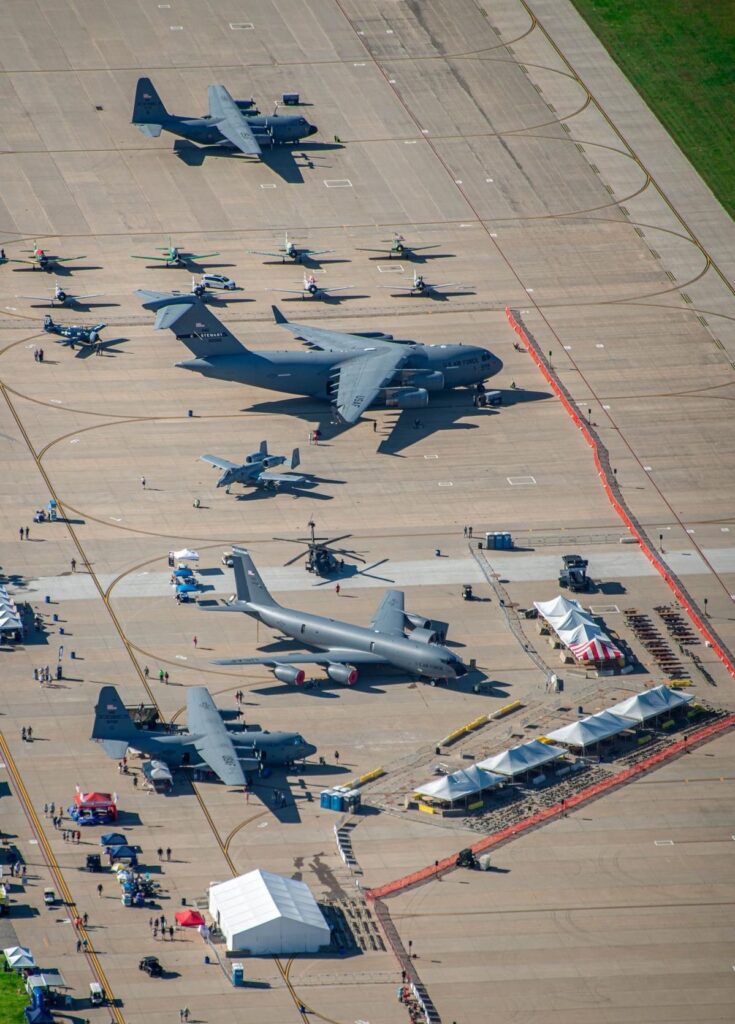
When people think about the aircraft that keep the U.S. military moving, the focus usually goes straight to the massive C-17 or the well-known C-130. But quietly operating below them in the air hierarchy is the KC-135 Stratotanker, an aircraft that plays a role just as important, even if it does not always get the same attention. Without it, many of the missions flown by larger transport aircraft would simply not be possible.
The KC-135 Stratotanker was designed with one main purpose in mind: aerial refueling. Instead of carrying troops, vehicles, or heavy equipment like the C-17 or C-130, the KC-135 carries fuel. That might sound simple, but in modern warfare and long-range operations, fuel is everything. Fighter jets, bombers, and even transport aircraft depend on tankers to stay in the air longer and reach destinations that would otherwise be out of range.
Compared to the huge C-17 Globemaster III, the KC-135 sits a step below in size and capability when it comes to cargo transport. The C-17 can move heavy military vehicles, large numbers of troops, and massive supplies across continents in a single flight. The KC-135 does not compete in that area. Instead, it supports the mission indirectly. By refueling aircraft like the C-17 in the air, the Stratotanker extends the reach of the entire fleet. This means a C-17 can travel farther without stopping, deliver cargo faster, and stay on mission longer.
The same relationship exists with the C-130. The C-130 Hercules is famous for its ability to land on short runways, operate in rough environments, and support missions close to the front line. It is smaller than the C-17 but extremely flexible. The KC-135 fits below both of them in terms of cargo strength, but its value shows up in endurance. If a C-130 needs to stay airborne for long missions, especially during combat or disaster relief operations, an aerial refueling tanker becomes essential. The KC-135 makes that possible.
Another reason the KC-135 remains important is its reliability. The aircraft has been in service for decades, yet it continues to perform effectively. Its design is simple compared to newer aircraft, which actually works in its favor. Maintenance crews understand it well, spare parts are widely available, and it can operate in a wide range of conditions. While newer tankers are slowly replacing it, the KC-135 still forms the backbone of aerial refueling operations in many situations.
In real missions, the Stratotanker often works quietly behind the scenes. It launches early, flies long distances, and stays in the air waiting for other aircraft to arrive. Fighters approach one by one, connect to the refueling boom, take on fuel, and return to their mission. Transport aircraft can also refuel mid-flight, which helps them move supplies faster across the world. Without the KC-135, the reach of the Air Force would shrink dramatically.
So while the C-17 carries the heavy load and the C-130 handles flexible missions, the KC-135 plays the role that makes everything possible. It may sit below them in size and cargo capability, but in terms of importance, it stands right beside them. The Stratotanker proves that sometimes the aircraft that carries fuel is just as valuable as the one that carries the cargo.