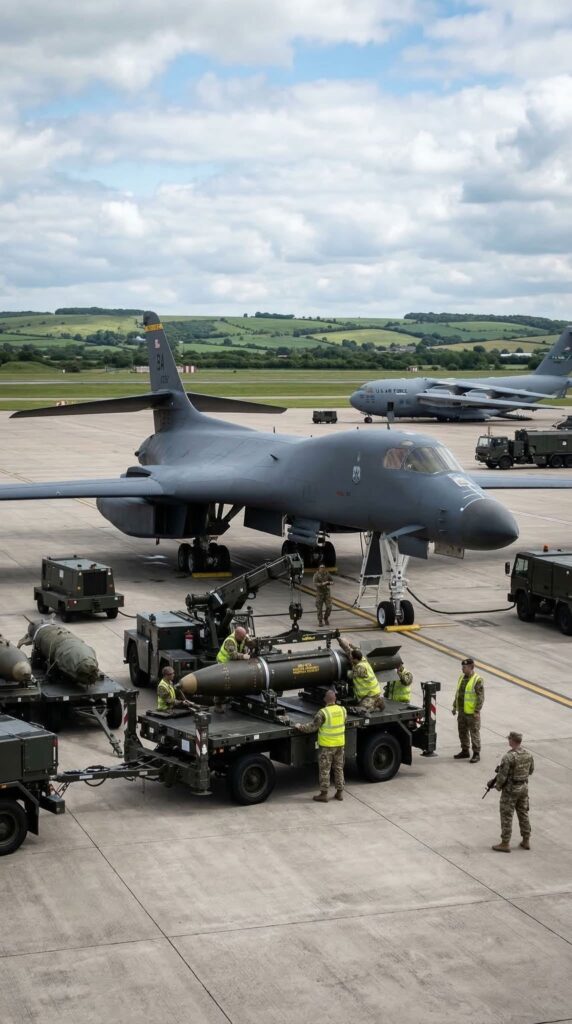
range bombers ever developed by the United States Air Force. Known for its speed, heavy payload, and distinctive variable-sweep wings, the aircraft has played an important role in American military operations since the Cold War. Developed by Boeing, which absorbed Rockwell International, the B-1B was designed to replace older bombers and provide the United States with a flexible strategic weapon capable of carrying both conventional and nuclear weapons.
The origins of the B-1 program began in the 1970s during a period of intense rivalry between the United States and the Soviet Union. Military planners wanted a bomber that could fly faster, farther, and lower than existing aircraft while avoiding enemy radar systems. The result was the B-1A prototype, which first flew in 1974. However, due to high costs and changing defense strategies, the original program was canceled in 1977. Several years later, the program was revived under President Ronald Reagan, leading to the development of the improved B-1B Lancer.
One of the most recognizable features of the B-1B is its swing-wing design. The wings can move backward or forward depending on the aircraft’s speed and mission requirements. When flying at low speeds, the wings extend outward to provide better lift and control. At higher speeds, the wings sweep backward to reduce drag and improve aerodynamic performance. This design allows the aircraft to operate effectively in many different combat situations.
The B-1B Lancer is capable of flying at speeds greater than Mach 1.2, making it one of the fastest bombers in the world. It can carry a massive payload of bombs and missiles, including precision-guided weapons used in modern warfare. Unlike stealth bombers such as the B-2 Spirit, the B-1B relies more on speed, low-altitude flight, and electronic countermeasures to survive enemy defenses.
Throughout its service history, the B-1B has participated in several military conflicts, including operations in Afghanistan and Iraq. During these missions, it proved highly effective at delivering large numbers of precision strikes against enemy targets. Air crews often praised the aircraft for its endurance and versatility. The bomber’s ability to remain in the air for long periods made it valuable for supporting ground forces during combat operations.
Despite its impressive capabilities, the B-1B has faced maintenance challenges over the years. Aging systems and the demands of continuous operations have increased repair costs and reduced fleet availability. As a result, the United States Air Force plans to gradually retire the B-1B and replace it with the next-generation B-21 Raider.
Even so, the B-1B Lancer remains an iconic symbol of American air power. Its combination of speed, firepower, and advanced engineering has earned it a respected place in aviation history. For decades, the aircraft has demonstrated the importance of strategic bombers in maintaining military strength and global reach.