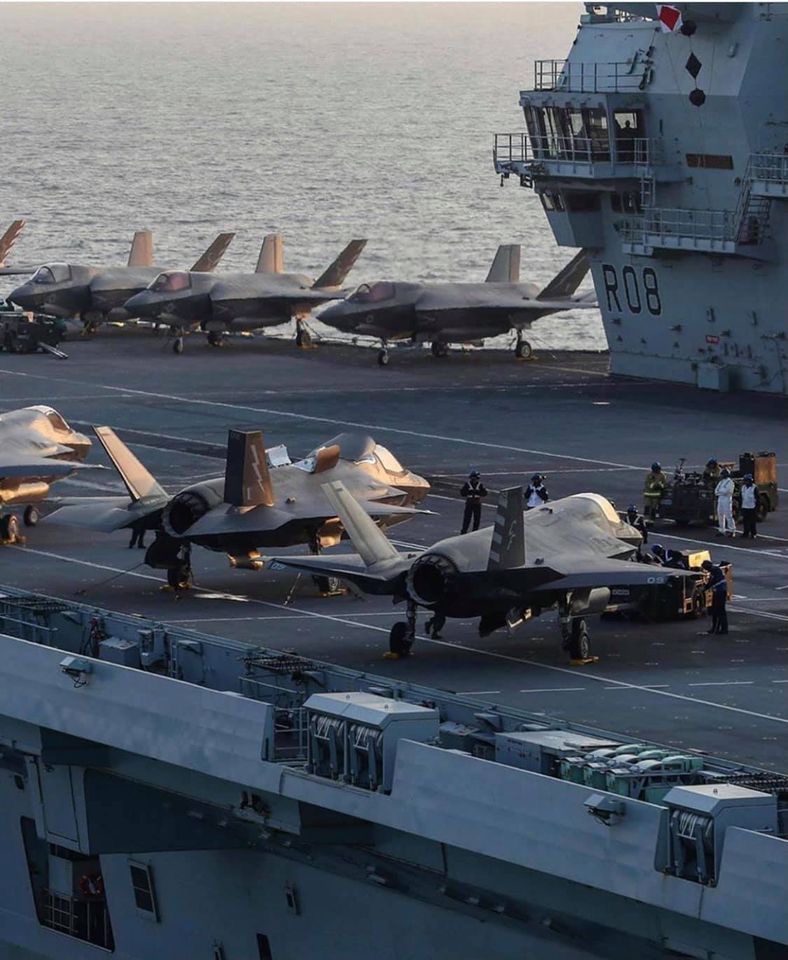
The F-35B Lightning II is one of the most distinctive variants of the F-35 Joint Strike Fighter program. What sets it apart is its ability to take off from short runways and land vertically, a capability known as STOVL, short takeoff and vertical landing. This feature allows the aircraft to operate from amphibious assault ships, small aircraft carriers, and forward bases close to the front line, giving commanders far more flexibility than traditional fighter jets.
Developed primarily for the United States Marine Corps, the F-35B replaces older aircraft such as the AV-8B Harrier. While the Harrier pioneered vertical landing in combat jets, the F-35B represents a major technological leap. It combines STOVL capability with stealth design, advanced sensors, and networked combat systems. This means it can survive and operate in heavily defended airspace while still supporting troops on the ground or conducting strike missions.
One of the most impressive aspects of the F-35B is how it achieves vertical landing. The aircraft uses a shaft-driven lift fan located behind the cockpit, paired with a swiveling rear exhaust nozzle. During vertical operations, the lift fan provides upward thrust at the front while the exhaust nozzle rotates downward at the rear, keeping the aircraft balanced. This complex system allows pilots to land on ships or small pads with precision, even in challenging conditions.
Beyond its unique flight capabilities, the F-35B is built around information dominance. Its sensors collect vast amounts of data from radar, infrared systems, and electronic warfare equipment. This information is fused into a single, clear picture displayed to the pilot through advanced cockpit screens and a helmet-mounted display. Rather than managing multiple separate systems, the pilot can focus on making decisions, which improves effectiveness and reduces workload during combat.
The aircraft’s stealth design also plays a central role. Shaping, materials, and internal weapons bays help reduce its radar signature, allowing it to approach targets with a lower chance of detection. This is especially important for the F-35B, which may operate from forward locations that are more exposed to enemy threats. Stealth, combined with precision-guided weapons, allows the aircraft to strike high-value targets early in a conflict.
Internationally, the F-35B has attracted strong interest. The United Kingdom operates the aircraft from its Queen Elizabeth class aircraft carriers, marking a return to carrier-based fixed-wing aviation for the Royal Navy. Other allies see the F-35B as a way to project air power without relying on large, traditional carriers, making it a strategic asset for smaller navies and expeditionary forces.
In summary, the F-35B Lightning II is more than just a fighter jet with vertical landing ability. It represents a shift in how air power can be deployed, combining flexibility, survivability, and advanced technology. Its ability to operate close to the fight while delivering modern combat capabilities makes it a key component of current and future military operations.