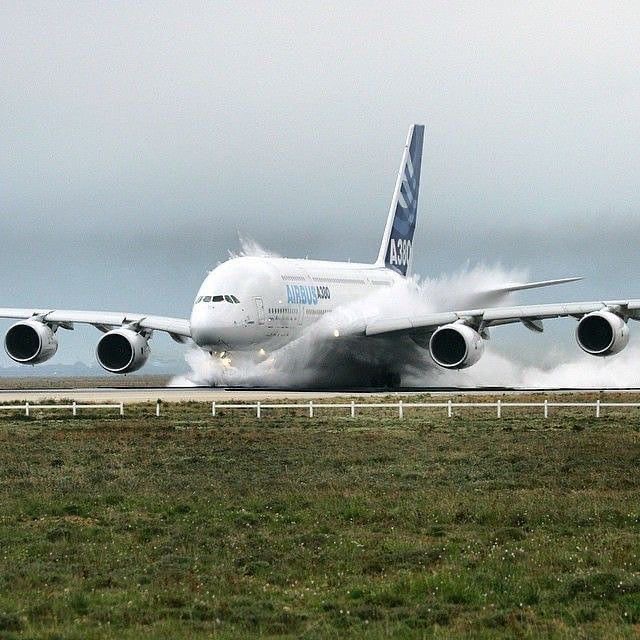
The Airbus A380 is the largest passenger airliner ever built and remains one of the most recognizable aircraft in commercial aviation. Designed and manufactured by Airbus, the A380 was developed to meet growing demand for high capacity, long haul air travel between major global hubs. Its full length double deck configuration and distinctive silhouette set it apart from every other airliner in service.
The A380 program was officially launched in 2000, with the goal of challenging the long standing dominance of the Boeing 747. Airbus envisioned an aircraft capable of carrying more than 500 passengers in typical three class layouts, while offering greater comfort and improved fuel efficiency per seat. The first flight took place in 2005, and commercial service began in 2007 with Singapore Airlines.
Technically, the A380 is a marvel of modern engineering. It features four high bypass turbofan engines, advanced fly by wire flight controls, and extensive use of lightweight composite materials. With a maximum takeoff weight of around 575 metric tons and a range exceeding 8,000 nautical miles depending on configuration, the aircraft can connect cities such as London and Sydney or Dubai and Los Angeles without refueling. Its wingspan stretches nearly 80 meters, and its two passenger decks run the full length of the fuselage, making it the only commercial aircraft with such a layout.
Inside, the A380 offers a level of space unmatched by other airliners. Airlines have used this extra volume creatively. Some installed onboard lounges, bars, and even shower spas in premium cabins. Economy class passengers also benefit from wider cabins and quieter flight conditions. The aircraft’s size allows for broader aisles and larger overhead bins, contributing to a more comfortable long haul experience.
However, the A380 entered service during a period of changing airline strategy. While Airbus designed it around the hub and spoke model, many carriers began shifting toward point to point travel using smaller, more fuel efficient twin engine aircraft. Advances in long range jets such as the Boeing 787 Dreamliner and the Airbus A350 made it economically viable to operate direct routes between secondary cities, reducing the need for ultra large aircraft.
Despite strong support from key customers like Emirates, overall sales did not meet Airbus’s expectations. In 2019, Airbus announced it would end A380 production, with final deliveries completed in 2021. The decision marked the close of an ambitious chapter in aviation history.
Today, the A380 continues to serve with several international airlines and remains a favorite among aviation enthusiasts and passengers alike. Its smooth ride, quiet cabin, and unique onboard features have earned it a loyal following. While production has ended, the Airbus A380 stands as a bold statement of engineering ambition, symbolizing an era when airlines believed bigger truly was better.