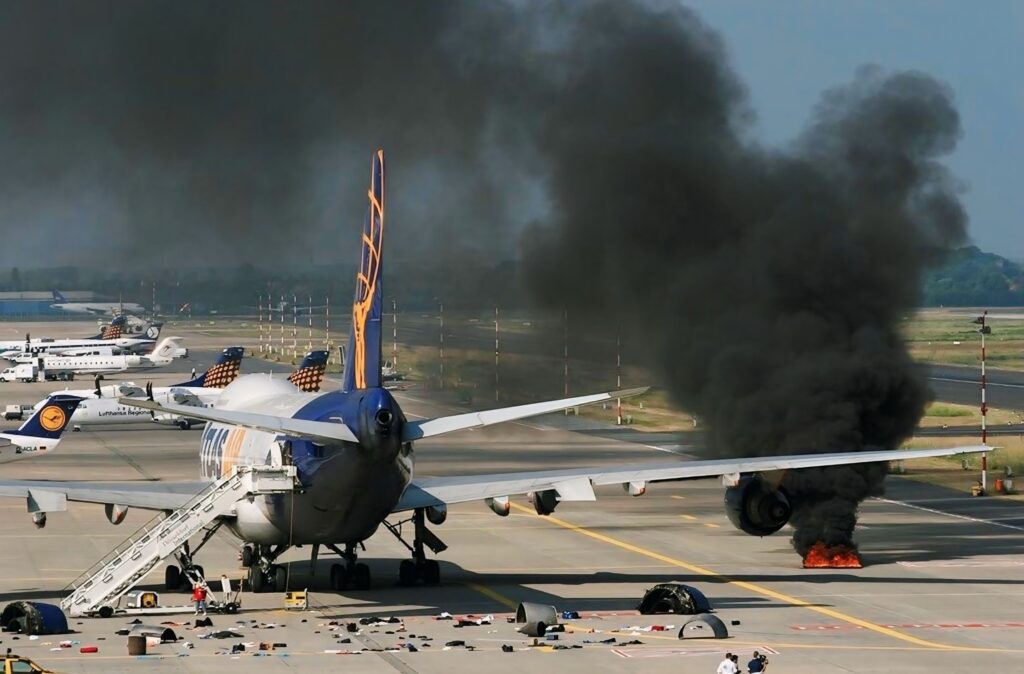
The McDonnell Douglas MD-11F, registration D-ALCQ, was a wide-body cargo aircraft operated by Lufthansa Cargo. This model, a freighter variant of the MD-11, was developed from the DC-10 and designed primarily for long-range cargo and passenger transport. D-ALCQ was one of several MD-11Fs in Lufthansa Cargo’s fleet, playing a key role in the airline’s global freight operations. Built for efficiency and capacity, it was capable of carrying large payloads across intercontinental routes, linking major logistics hubs worldwide.
The MD-11F combined a three-engine configuration with advanced aerodynamics for its time. Its engines—typically General Electric CF6-80C2D1F or Pratt & Whitney PW4460—offered strong performance and reliability. With a maximum takeoff weight of around 285,000 kilograms, the MD-11F could fly more than 6,000 nautical miles when fully loaded, making it well suited for transoceanic freight services. Lufthansa Cargo’s MD-11Fs were regularly seen on routes between Europe, Asia, and North America, transporting goods ranging from consumer electronics to automotive parts and pharmaceuticals.
D-ALCQ, delivered to Lufthansa Cargo in the late 1990s, had served for many years before being retired as part of the airline’s fleet modernization plan. Like other MD-11Fs, it featured an updated digital flight deck with six large electronic displays, a significant step up from the analog instruments of earlier generations. The cockpit was designed for two pilots, eliminating the need for a flight engineer, which helped reduce operating costs. The aircraft’s cargo handling system was also sophisticated, allowing for efficient loading and unloading of unit load devices (ULDs) through its main deck side cargo door.
Despite its strengths, the MD-11 series developed a mixed reputation among pilots and operators. Its long fuselage and relatively small horizontal stabilizer made it more challenging to handle during takeoff and landing compared to other wide-body jets. The aircraft’s tendency to pitch up quickly during landing—especially if the pilot overcorrected—led to several hard landings and runway incidents across its service history. Nonetheless, many cargo airlines valued its combination of range, payload, and operating economics, keeping it in service long after passenger variants were retired.
By the early 2020s, the MD-11F had largely disappeared from most major fleets as newer, more fuel-efficient aircraft such as the Boeing 777F and Airbus A350F entered service. Lufthansa Cargo, one of the largest remaining operators, began phasing out its MD-11Fs in favor of an all-777F fleet. D-ALCQ was among the last of its type to operate commercial cargo flights under Lufthansa’s banner, marking the end of an era for both the airline and the aircraft model.
The legacy of D-ALCQ and its sister aircraft remains significant in aviation history. The MD-11F bridged the gap between older tri-jet designs and the modern twin-engine freighters that dominate the skies today. Though no longer flying under Lufthansa Cargo, D-ALCQ represents a period of innovation and transition in air freight, embodying both the ambition and the challenges of late-20th-century aircraft design.