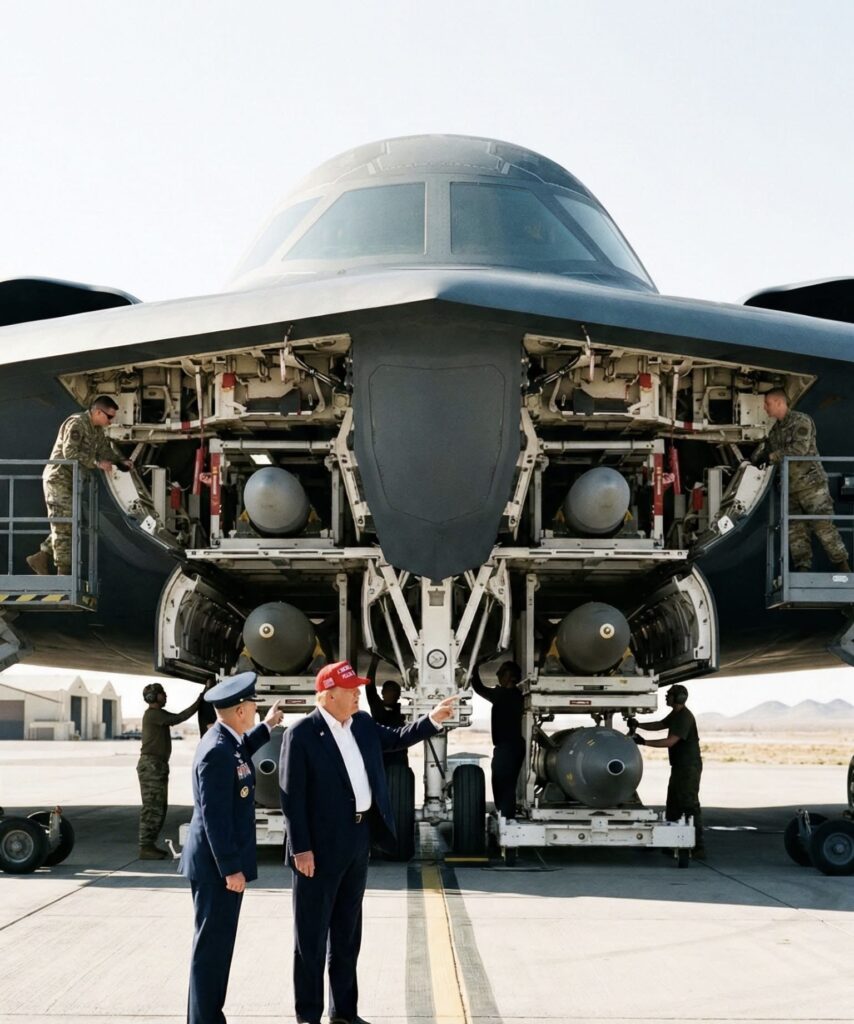
The scene opens on a quiet pre-dawn ramp, where the B-2 Spirit rests under low lights that turn its skin into a blend of shadow and silver. Even at a distance, the aircraft looks otherworldly, its flying-wing shape spreading across the concrete like a giant silhouette waiting to come alive. Around it, the crew moves with a steady rhythm, each person focused on their role as they prepare to load one of the Air Force’s most recognizable strategic bombers.
A specialized weapons loader pulls up beside the aircraft, its engine humming at a careful idle. The crew chief signals the team, and the operation begins. Every movement is deliberate. The missiles are secured in reinforced containers that look almost understated compared to the size of the bomber beside them, yet the weight of what they carry is unmistakable. The moment the container doors open, the team shifts into a tighter formation. Two technicians inspect the guidance mounts, electrical connectors, and safety locks before any lifting starts. Their calm back-and-forth is clipped and clear, the kind of communication built on long practice.
The hoist rises slowly, carrying the missile toward the open weapons bay. The B-2’s bay doors give the impression of a mouth opening from beneath the aircraft, revealing the carefully arranged racks inside. The interior is spotless, a contrast to the rugged equipment surrounding it. A separate technician waits on a lift inside the bay, checking alignment markers as the missile inches toward its slot. This part demands precision. Even a slight misalignment could complicate the entire process, so the team moves at a pace measured in inches per minute rather than feet.
Once the missile is in the correct position, the bay technician calls out the next set of checks. Mechanical clamps secure the missile with a firm, metallic click that echoes through the bay. Electrical lines are connected, verified, and logged. The team repeats each confirmation verbally and digitally, creating a record that ensures nothing is left to memory alone. When the clamps lock into place, the hoist eases tension and slowly backs away.
Outside, the air smells faintly of fuel and cold metal. The sun is just starting to rise, tinting the edge of the sky with blue. Crew members step back to review the final checklist as the bay doors close with a smooth sweep. The bomber’s profile returns to its clean, seamless appearance, as if nothing at all had been placed inside. That stealthy shape is part of what makes the B-2 such a central figure in long-range missions. Its ability to carry heavy ordnance without sacrificing its signature low visibility is the reason this entire early-morning ritual exists.
By the time the final signatures are entered, the aircraft looks ready to wake. The crew disperses to prepare the next phase. For them, this is routine work. For anyone watching, it’s a rare look at the careful choreography behind one of the United States Air Force’s most iconic aircraft.