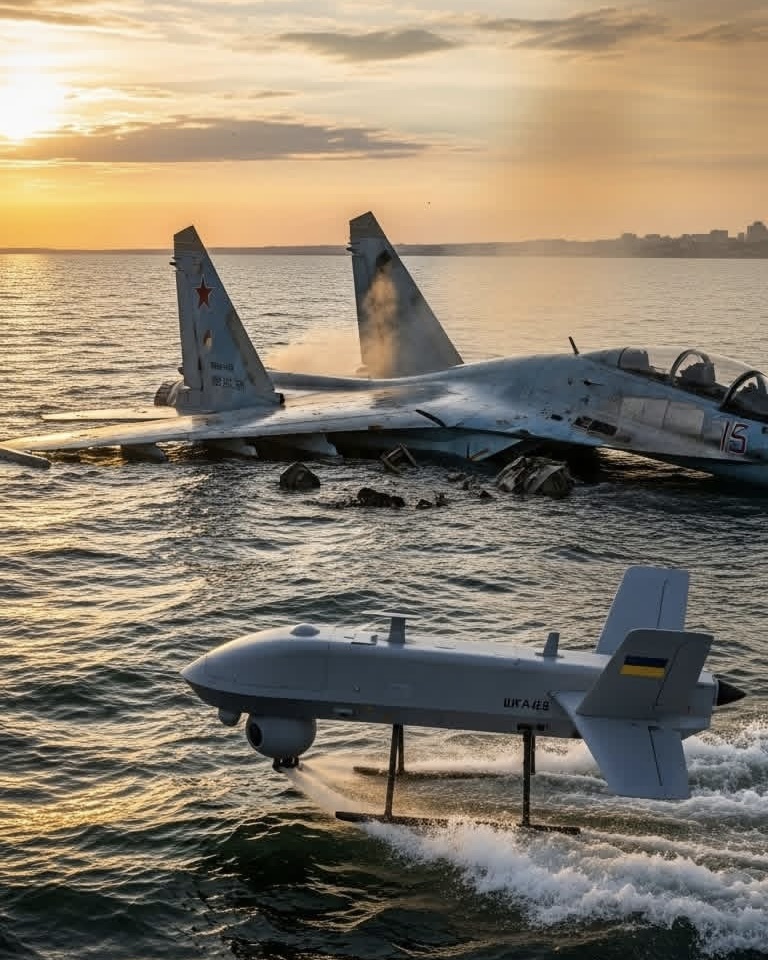
The Sukhoi Su-27 and Su-30 share the same Flanker family name, but each fills a different role in modern air forces. Both aircraft were developed by Russia’s Sukhoi Design Bureau and have become some of the most recognizable fighters in service today. Although they look similar at a glance, the two jets reflect different generations of design thinking and operational needs.
The Su-27 was the starting point. Conceived during the Cold War, it entered service in the mid-1980s as a counter to American fighters such as the F-15. The goal was straightforward: create a long-range, high-performance air-superiority fighter that could intercept and defeat advanced threats. Its large blended-wing body, powerful turbofan engines and generous fuel capacity gave it impressive reach. It could fly far beyond Russia’s borders without refueling, which was important for defending the country’s vast airspace.
What made the Su-27 stand out was its maneuverability. The airframe was engineered for agility, allowing it to perform extreme angles of attack and tight turns. These traits helped build the aircraft’s reputation in international air shows, where demonstrations often highlighted its “Cobra” maneuver. In actual operations, the Su-27 served as a dependable backbone for Russian and several foreign air forces, providing air defense and escort duties. Its avionics and weapons were suited for the era, though by today’s standards they appear dated.
The Su-30 grew out of efforts to expand what the original Flanker could do. While the Su-27 focused on air-to-air combat, the Su-30 introduced multirole capabilities. It kept the core Flanker airframe but added structural changes, upgraded electronics and a two-seat cockpit. The second seat created room for a weapons systems officer, which opened the door to more complex missions. The aircraft could switch from intercepting hostile fighters to striking targets on the ground in a single sortie.
Over time, the Su-30 branched into several variants, many of them tailored for export customers. Some versions carry thrust-vectoring engines, which give the jet even greater agility at low speeds. Others prioritize radar improvements, precision-guided weapons or advanced communication systems. This flexibility is one of the reasons the Su-30 has been widely exported and remains in service across Asia, Africa and South America.
Comparing the two aircraft shows how design priorities evolved. The Su-27 was optimized for air-superiority dominance at a time when long-range engagements were a major concern. It was fast, stable and built around the idea that the pilot should have the raw performance needed to win a dogfight. The Su-30, on the other hand, reflects the demands of modern air operations, where versatility can matter as much as pure speed or turn rate. With better avionics, improved sensors and a wider set of weapons, it can engage in missions that the Su-27 was never meant to handle.
Despite their differences, both jets share the qualities that made the Flanker family famous: strong performance, impressive handling and a solid operational record. Whether viewed as a pair or on their own merits, the Su-27 and Su-30 highlight how a single design can evolve into a family of capable fighters that continue to shape airpower around the world.