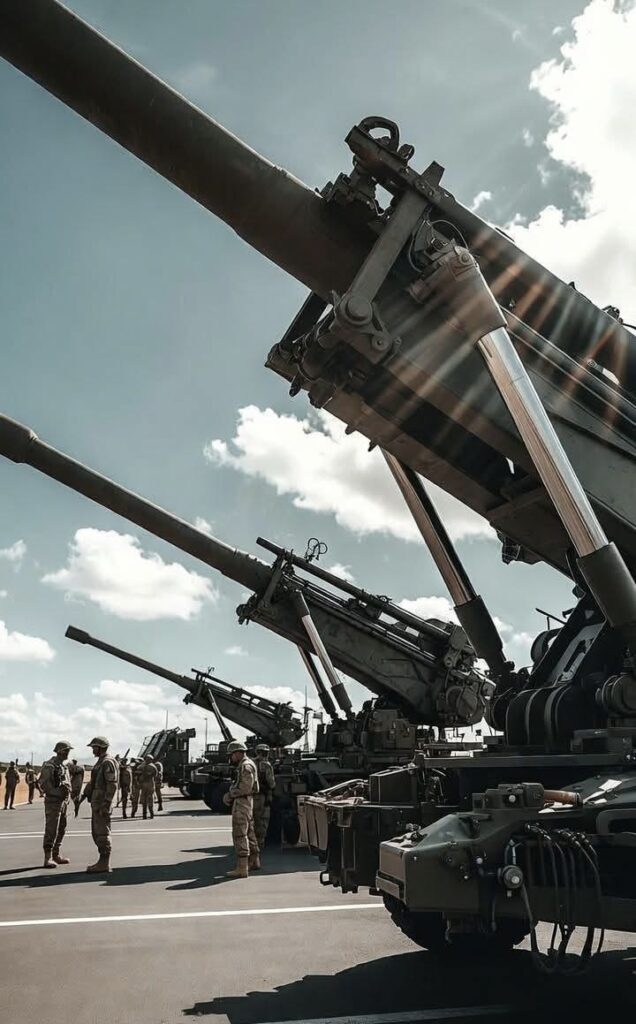
Big artillery has always held a certain pull on the imagination. It’s the kind of firepower that can shift the balance of a battlefield, reshape strategy, and demand respect simply by existing. When people talk about heavy guns, they usually picture massive barrels, crews working in rhythm, and the deep thunder that rolls across the ground when a round is fired. But big artillery is more than size and noise. It’s a mix of engineering, logistics, and training that turns a huge piece of metal into a precision tool.
The most striking thing about large artillery pieces is the amount of coordination they require. A tank can move with a small crew, but a big gun needs a full team to calculate range, adjust elevation, load shells, and handle communication with spotters. Every person has a task, and the timing has to be clean for the weapon to operate safely. When the system is running well, the entire crew works like a single unit. When something breaks down, the results can be dangerous.
Artillery has always been tied to technology. Early cannons were little more than iron tubes, but improvements in metallurgy, propellant chemistry, and fire control turned them into far more capable weapons. By the early twentieth century, nations were using guns so large that they had to be mounted on special rail platforms. They fired shells the size of small cars and could hit targets many miles away. Their advantage came from distance. Infantry and cavalry couldn’t answer a threat they couldn’t reach. Even aircraft struggled to attack well-protected guns.
Modern heavy artillery still follows the same ideas but is far more flexible. Computer-guided systems calculate firing solutions in seconds. Radar tracks the arc of incoming shells so crews can fire back before the enemy even finishes a volley. Precision-guided rounds can strike within a few feet of a target, something that was impossible a few decades ago. Big guns also sit on mobile platforms much more often now, allowing armies to fire and move before the enemy can answer.
There’s also the human side of it. Big artillery demands a certain mindset. Crews spend long periods waiting for fire missions, then burst into action with speed that would surprise most people. The work is physical. Shells for heavy guns often weigh more than a person. Loading them isn’t graceful, and no one stays clean for long. But there’s a sense of pride that comes from operating something powerful and precise. Many gunners talk about the feeling of the ground shaking under their boots when they send a round downrange.
Even with all the improvements in drones and missiles, big artillery still plays a central role in modern conflict. Missiles are fast and accurate, but they’re expensive. A well-placed artillery battery can deliver long-lasting fire at a fraction of the cost. As long as armies need a way to control space and pressure an opponent from afar, these heavy guns will remain important. They’re a reminder that size, when paired with skill and planning, can still shape the outcome of a fight.