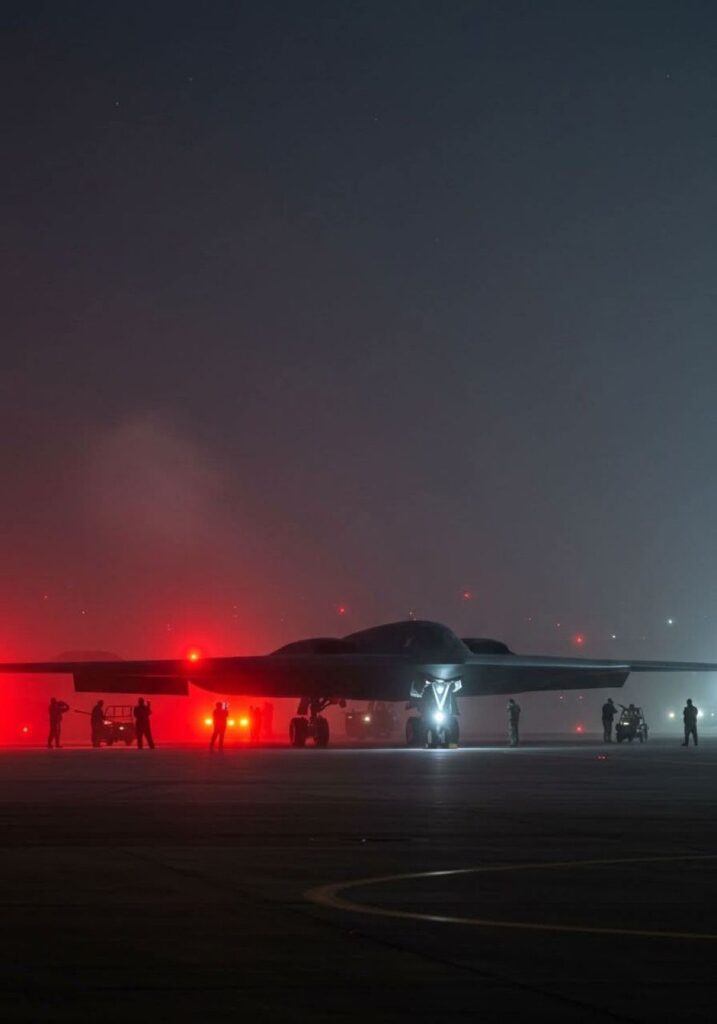
The Northrop Grumman B-21 Raider is the United States Air Force’s next-generation long-range stealth bomber, designed to replace much of the aging B-1B and B-2 fleets and to serve as the core of America’s strategic strike capability for decades ahead. Built with modern stealth shaping, advanced materials and a digital-first engineering approach, the B-21 represents a major leap in survivability and mission flexibility.
Externally, its design continues the flying-wing lineage seen in the B-2 Spirit, but the B-21 is smaller, cleaner and engineered with far more efficient shaping for low observability. The Air Force has emphasized that the aircraft is optimized to operate in highly contested environments where advanced radar systems are present. The intent is simple: reach targets other aircraft cannot, carry out precision missions and return without detection.
One of the Raider’s defining traits is its “open systems architecture.” In practical terms, it means the aircraft was designed so new sensors, defensive systems and weapons can be integrated more easily over time. Rather than requiring large redesigns for upgrades, the B-21 can accept modular improvements, allowing it to stay relevant as technology and threats evolve. This approach helps the Air Force avoid long gaps between capability updates and supports a fleet that can adapt throughout its life cycle.
While many of its details remain classified, the B-21 is expected to carry both conventional and nuclear payloads. It can operate with a crew or autonomously, a feature that reflects the shift toward flexible mission profiles and reduced operational risk. Its payload options will likely include advanced long-range missiles, standoff weapons and precision-guided munitions tailored for both land and maritime targets.
The aircraft is projected to have greater efficiency and lower sustainment costs compared with previous stealth bombers. Northrop Grumman and the Air Force have repeatedly stressed affordability and maintainability as core goals. Stealth aircraft traditionally require demanding upkeep, but the Raider’s materials and design aim to reduce that burden, improving readiness and long-term value.
Initial flight testing began after the aircraft’s public rollout in late 2022. These tests focus on validating aerodynamics, stealth characteristics, systems integration and performance across a range of conditions. The Air Force plans to base the first operational B-21 units at Ellsworth Air Force Base, with additional locations to follow as production grows.
The Raider’s name pays tribute to the Doolittle Raiders, the World War II aviators who carried out the daring 1942 mission against Tokyo. The historical reference underscores the aircraft’s role as a strategic tool designed to reach distant targets and signal U.S. capability and resolve.
As production ramps up, the B-21 is set to become the backbone of America’s bomber force. Its blend of range, stealth and adaptability positions it as a central asset for deterrence, power projection and global strike operations well into the future.