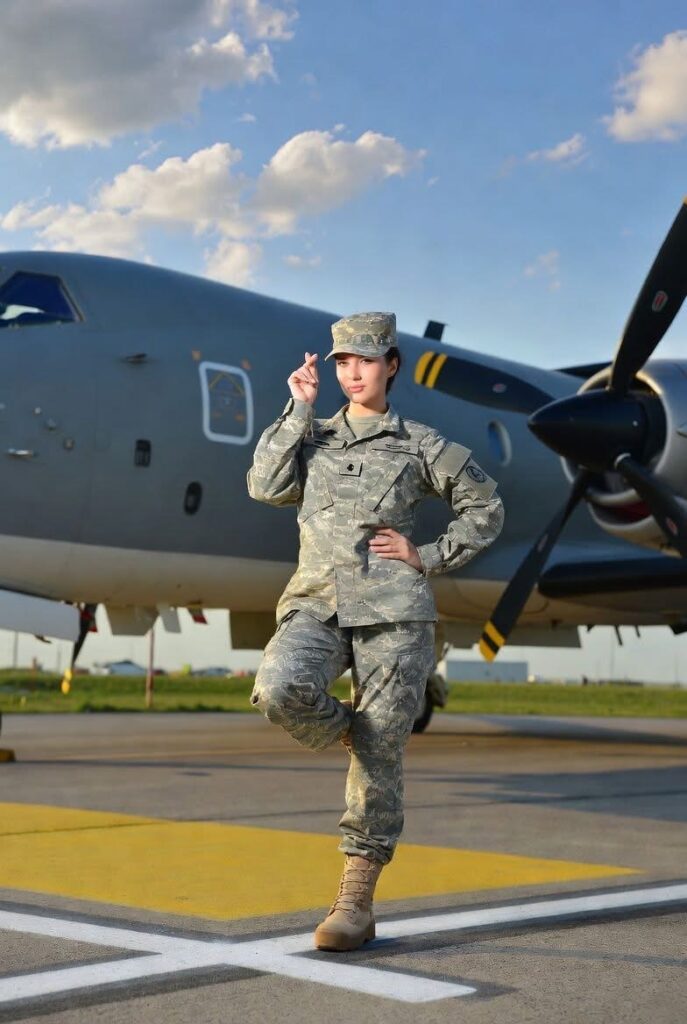
The C-27J Spartan is a twin-engine military transport aircraft designed to move people and cargo into places where larger airlifters cannot easily go. Built by Leonardo in Italy, the Spartan fills a practical gap between light tactical aircraft and heavy transports. Its strength lies in flexibility, reliability, and the ability to operate from short or unimproved runways.
At its core, the C-27J is about access. Many military and humanitarian missions require aircraft that can land close to the action, often on rough strips with limited support. The Spartan was built for that environment. It can take off and land in short distances, handle steep approaches, and operate in hot and high conditions. This makes it especially useful in mountainous regions, deserts, and remote areas where infrastructure is minimal.
The aircraft shares key components with the larger C-130J Hercules, including its engines and avionics. This commonality matters. It reduces training time, simplifies maintenance, and lowers operating costs for air forces that already fly the Hercules. The C-27J uses two Rolls-Royce AE 2100 turboprop engines with six-blade propellers, giving it strong performance and good fuel efficiency for its class.
Inside, the Spartan is compact but capable. It can carry around 11.5 tons of cargo, up to 60 troops, or a mix of vehicles, pallets, and equipment. The cargo bay is designed for fast loading and unloading, with a rear ramp that supports a wide range of mission profiles. These include troop transport, cargo resupply, medical evacuation, and disaster relief. The aircraft can be reconfigured quickly, allowing operators to switch roles without long delays.
Avionics are modern and mission focused. The cockpit uses digital displays and advanced navigation systems that support low-level flight and night operations. This improves safety and situational awareness, especially in demanding conditions. The aircraft can also be equipped with defensive systems depending on mission needs, allowing it to operate in higher threat environments.
The C-27J has been adopted by several air forces around the world. Operators value its balance of size and capability. It is large enough to carry meaningful loads but small enough to deploy efficiently and operate independently. In humanitarian roles, the Spartan has proven useful for delivering food, medical supplies, and personnel after natural disasters. Its ability to land close to affected communities can make a real difference when time matters.
In summary, the C-27J Spartan is not designed to impress through sheer size or speed. Its value comes from practicality. It is an aircraft built to do difficult jobs in difficult places, day after day. By combining modern systems with rugged performance, the Spartan remains a relevant and dependable platform for military and humanitarian operations alike.