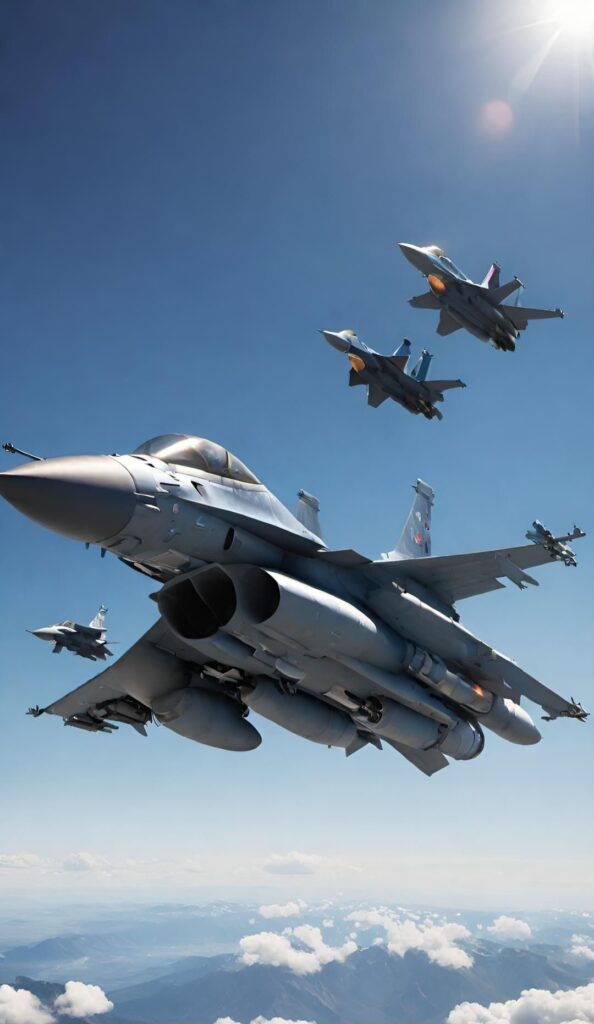
The F-16 Fighting Falcon stands as one of the most influential fighter aircraft ever built. First flown in 1974 and introduced into service in the late 1970s, the F-16 was designed to be a lightweight, agile, and affordable combat aircraft. Over time, it grew far beyond that original concept, becoming a multirole workhorse used by more than two dozen air forces around the world.
At its core, the F-16 was built around maneuverability. Its relaxed static stability design, paired with a fly by wire flight control system, allowed pilots to push the aircraft to its limits while maintaining precise control. This was a major shift from earlier fighters that relied on mechanical linkages and inherent aerodynamic stability. The result was an aircraft that could turn faster, accelerate quickly, and maintain energy in a dogfight. The distinctive bubble canopy and side mounted control stick also gave pilots exceptional visibility and comfort during high stress combat maneuvers.
Powering the Fighting Falcon is a single high performance turbofan engine, either from Pratt and Whitney or General Electric, depending on the variant. This engine gives the F-16 an impressive thrust to weight ratio, enabling rapid climbs and sustained supersonic flight. Despite having only one engine, the aircraft proved to be reliable and cost effective, a key factor in its widespread adoption.
While the F-16 earned early praise as an air to air fighter, its true strength lies in versatility. The aircraft can carry a wide range of weapons, including air to air missiles, precision guided bombs, unguided munitions, and electronic warfare pods. This flexibility allows it to perform missions such as air superiority, close air support, suppression of enemy air defenses, and deep strike operations. Modern variants feature advanced radar systems, helmet mounted displays, and sophisticated avionics that allow pilots to detect, track, and engage multiple targets in complex environments.
Combat experience has played a major role in shaping the F-16’s reputation. It has seen action in conflicts across the Middle East, Europe, and Asia, often achieving strong results against both air and ground threats. Continuous upgrades have kept the aircraft relevant, with newer versions like the F-16V incorporating modern sensors and improved survivability features. These upgrades ensure that even older airframes can meet current operational demands.
Decades after its introduction, the F-16 Fighting Falcon remains a symbol of practical fighter design. It balances performance, adaptability, and cost in a way few aircraft have matched. Whether flown by major air forces or smaller nations seeking a capable and proven platform, the F-16 continues to demonstrate why it has earned its place as one of the most successful fighter jets in aviation history.