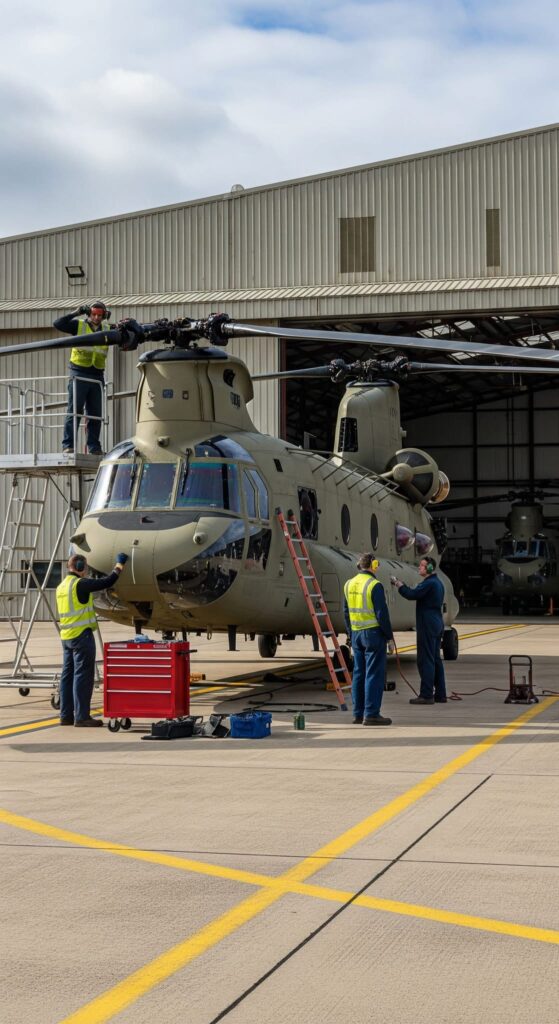
The C-47 is one of the most important transport aircraft of the twentieth century. Built in the United States, it became a symbol of reliability, endurance, and practical design. Though it began as a military version of a civilian airliner, it quickly proved itself as a backbone of Allied air operations during the Second World War and beyond.
The C-47 was developed from the Douglas DC-3, a commercial aircraft that first flew in 1935. The DC-3 had already transformed air travel by making long-distance passenger flights safer and more economical. When war approached, the U.S. military recognized the value of this sturdy design and adapted it for transport duties. The military version, designated C-47 Skytrain by the United States Army Air Forces, included reinforced flooring, a large cargo door, and a hoist attachment for lifting heavy loads. These modifications allowed it to carry troops, vehicles, ammunition, and medical supplies efficiently.
During World War II, the C-47 operated in nearly every major theater of the conflict. It flew over Europe, North Africa, and the Pacific, often under difficult and dangerous conditions. One of its most famous missions took place on D-Day, June 6, 1944, when hundreds of C-47 aircraft dropped paratroopers behind enemy lines in Normandy. These airborne troops played a crucial role in securing key positions before the main invasion forces arrived. The aircraft’s ability to fly low and slow while maintaining stability made it ideal for parachute operations.
Beyond combat missions, the C-47 was vital for logistical support. Armies rely on steady supply lines, and the C-47 ensured that fuel, food, and equipment reached frontline units. In remote regions where roads were poor or nonexistent, the aircraft provided a lifeline. After the war, it continued to serve in humanitarian roles. One notable example was the Berlin Airlift of 1948–1949, when Western Allied forces supplied West Berlin by air after the Soviet Union blocked land routes. C-47 aircraft were among the first planes to deliver essential goods during this operation.
Technically, the C-47 was powered by two radial engines and had a range of over 1,500 miles, depending on load. It could carry up to 28 fully equipped soldiers or several tons of cargo. Its rugged landing gear allowed it to operate from rough airstrips, making it highly versatile. Maintenance crews valued its straightforward mechanical systems, which contributed to its reputation for durability.
Even decades after its introduction, the C-47 remained in service with various air forces around the world. Some were converted for civilian cargo transport, firefighting, and even aerial research. Restored examples continue to fly at airshows and commemorative events, preserving the legacy of an aircraft that played a decisive role in modern history.
In summary, the C-47 was more than just a transport plane. It represented adaptability and dependability at a time when both were urgently needed. From wartime missions to peacetime relief efforts, the C-47 proved that a well-designed aircraft could shape events on a global scale.