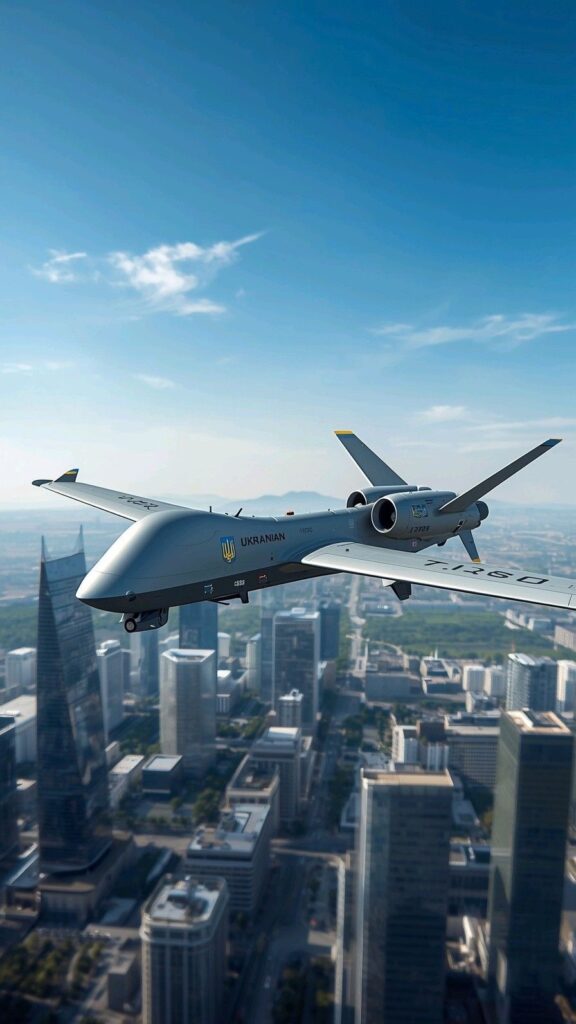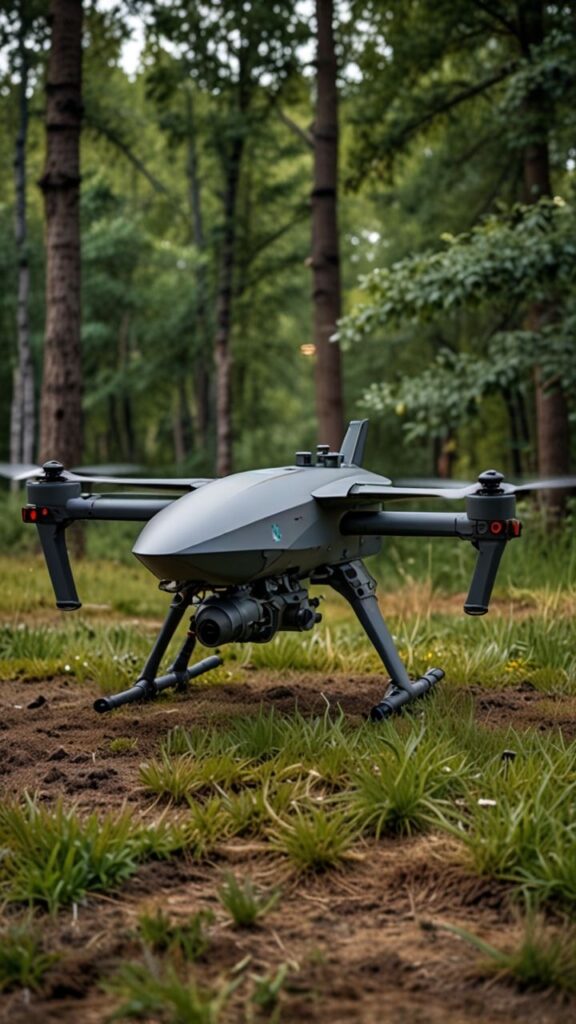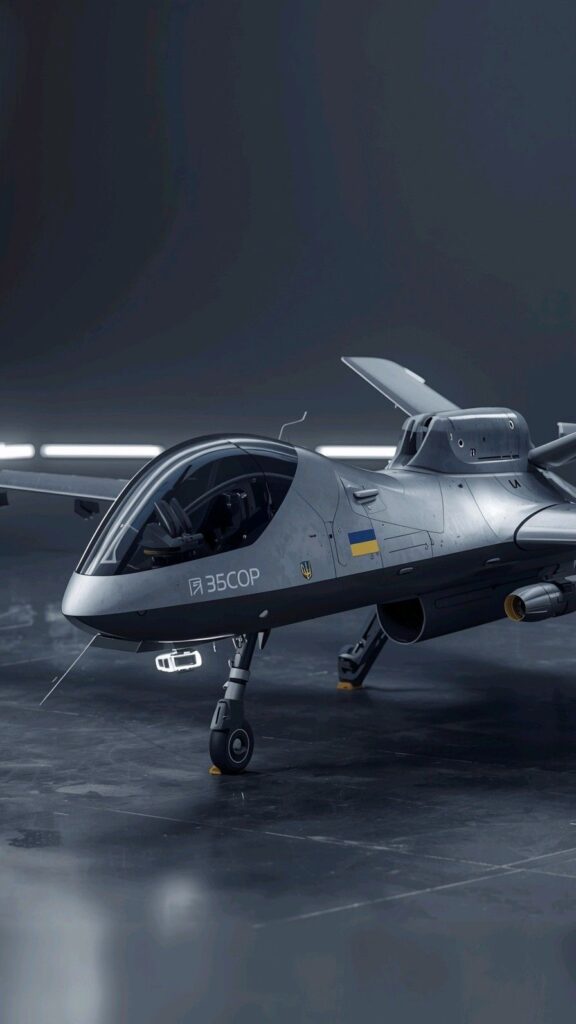
The UA-2027 is a conceptual next-generation unmanned aerial system designed to represent the future of military and multi-role autonomous aviation. As global defense technology continues to evolve, the UA-2027 symbolizes a shift toward highly intelligent aircraft capable of operating with minimal human intervention while carrying out complex missions across land and sea. Built around advanced artificial intelligence, stealth design, and flexible payload systems, the UA-2027 demonstrates how unmanned aircraft could reshape modern warfare and surveillance operations.
At its core, the UA-2027 is designed as a high-altitude, long-endurance drone. Its aerodynamic shape focuses on efficiency and low observability. The aircraft typically features a blended wing body design, allowing it to reduce radar cross-section while improving fuel efficiency and lift. This configuration also provides internal space for sensors, weapons, and communication systems without relying on large external pylons that would increase drag or radar visibility.
One of the defining characteristics of the UA-2027 is its advanced autonomy. Unlike earlier drones that rely heavily on constant human control, the UA-2027 can analyze mission objectives, environmental conditions, and potential threats in real time. Its onboard artificial intelligence allows it to navigate contested airspace, avoid enemy defenses, and adapt to unexpected situations. Human operators still supervise missions, but the aircraft can carry out many tasks independently, reducing workload and response time during critical operations.
The sensor suite onboard the UA-2027 is designed to support a wide range of missions. High-resolution electro-optical and infrared cameras allow it to conduct surveillance during both day and night operations. Synthetic aperture radar systems enable the drone to detect and map targets through clouds, smoke, or darkness. Signals intelligence equipment can intercept and analyze communications or radar emissions, providing valuable information to commanders on the ground.
Another important feature of the UA-2027 is its modular payload system. Mission equipment can be swapped quickly depending on operational requirements. For reconnaissance missions, the aircraft may carry additional imaging systems or communication relay equipment. For combat roles, the internal weapons bay can be equipped with precision-guided munitions designed for targeted strikes against enemy vehicles, radar systems, or fortified positions. This flexibility allows the same aircraft platform to perform multiple mission types without requiring entirely different designs.
Endurance is also a key advantage of the UA-2027. With efficient engines and lightweight composite materials, the drone can remain airborne for extended periods, often exceeding 30 hours of continuous operation. This long flight time makes it ideal for border monitoring, maritime patrol, and persistent intelligence gathering. Military planners value this capability because it allows continuous observation of key areas without rotating multiple aircraft in and out of the mission zone.
Communication systems on the UA-2027 are designed for secure, resilient operation. Satellite links and encrypted data channels allow the drone to transmit real-time imagery and sensor data to command centers thousands of kilometers away. Even in environments where communication signals are disrupted, the aircraft can continue executing pre-planned mission profiles until contact is restored.
The development of aircraft like the UA-2027 reflects the growing importance of unmanned systems in modern defense strategy. As technology improves, drones are expected to take on greater responsibility in reconnaissance, strike missions, and electronic warfare. By combining stealth, autonomy, and adaptability, the UA-2027 represents a vision of how future aerial systems may operate on tomorrow’s battlefield.