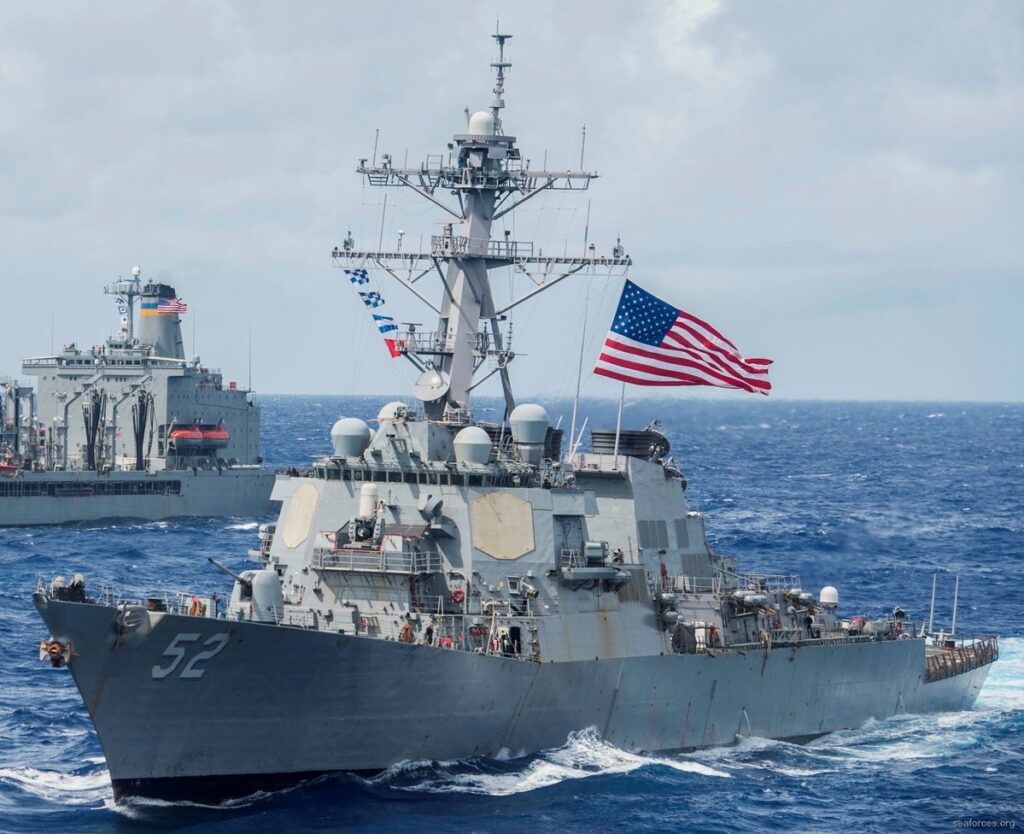
USS Barry (DDG-52) is a guided-missile destroyer in the United States Navy and part of the highly capable Arleigh Burke-class of warships. Commissioned in 1992, the ship has served for decades as a key component of American naval power, participating in security operations, deterrence missions, and multinational exercises around the world. Known for its advanced technology and versatility, USS Barry represents the modern evolution of destroyer warfare.
The ship is named after Commodore John Barry, an Irish-born officer who served during the American Revolutionary War and is often called the “Father of the American Navy.” Naming the vessel after him honors his leadership, courage, and early contributions to the development of the U.S. naval tradition.
USS Barry measures about 509 feet (155 meters) in length and displaces more than 9,000 tons when fully loaded. Like other ships in its class, it was designed to perform multiple combat roles at sea. Its primary mission areas include air defense, anti-submarine warfare, anti-surface warfare, and ballistic missile defense. This versatility allows the ship to operate independently or as part of a larger carrier strike group.
One of the most important features of USS Barry is the Aegis Combat System, a sophisticated radar and weapons control system that allows the ship to track and engage multiple targets simultaneously. The Aegis system works together with the ship’s SPY-1 radar, giving it powerful detection capabilities for aircraft, missiles, and other threats at long range. This system has made Arleigh Burke-class destroyers some of the most technologically advanced surface combatants in the world.
The ship is also equipped with the Vertical Launching System (VLS), which allows it to fire a wide variety of missiles. These include Tomahawk cruise missiles for long-range land attack, Standard missiles for air defense, and ASROC missiles used against submarines. In addition, USS Barry carries a 5-inch naval gun, torpedo tubes, and Phalanx Close-In Weapon Systems (CIWS) that provide defense against incoming missiles and small surface threats.
Throughout its service life, USS Barry has been deployed to many regions, including the Mediterranean Sea, the Middle East, and the Pacific Ocean. The ship has taken part in maritime security operations, freedom of navigation patrols, and joint exercises with allied navies. These deployments help maintain stability in international waters and demonstrate the United States Navy’s ability to operate globally.
In recent years, USS Barry has also played a role in ballistic missile defense missions, helping to protect allies and deployed forces from potential missile threats. The integration of missile defense technology into destroyers like Barry highlights the growing importance of naval forces in modern strategic defense.
The crew of USS Barry typically consists of about 300 officers and enlisted sailors, each responsible for operating the ship’s complex systems and maintaining readiness for any mission. Life aboard the destroyer requires discipline, teamwork, and technical expertise, as sailors must be prepared to respond to challenges both at sea and during combat situations.
Overall, USS Barry (DDG-52) remains an important symbol of modern naval capability. With its powerful weapons systems, advanced sensors, and highly trained crew, the ship continues to contribute to maritime security and the projection of naval power around the world.