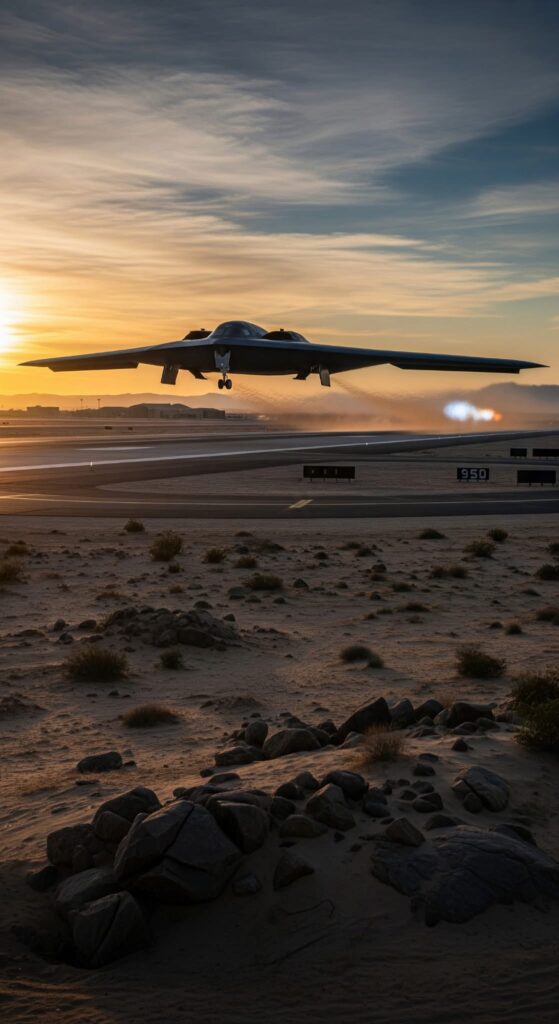
The Northrop Grumman B-2 Spirit is one of the most recognizable strategic bombers ever built. Known for its flying wing design and stealth technology, the aircraft has played a key role in modern air power since it first entered service with the United States Air Force in 1997. Even decades after its introduction, the B-2 Spirit continues to demonstrate why it remains one of the most advanced long-range bombers in the world.
Designed and manufactured by Northrop Grumman, the B-2 was created during the final years of the Cold War. Its mission was clear: penetrate heavily defended airspace, avoid radar detection, and deliver both conventional and nuclear payloads with precision. Unlike traditional bombers that rely on speed or heavy escort protection, the B-2 relies primarily on stealth. Its smooth, curved flying-wing shape reduces radar reflection, allowing it to slip through enemy defenses that would normally detect other aircraft.
One of the most impressive features of the B-2 Spirit is its range. The aircraft can fly more than 6,000 nautical miles without refueling and even farther with aerial refueling support. This allows it to launch missions from bases in the United States and strike targets anywhere in the world. Many of its missions originate from Whiteman Air Force Base in Missouri, the only operational base for the B-2 fleet.
The B-2 first proved its operational value during the Kosovo War in 1999. Flying directly from the United States, B-2 bombers conducted long-range strikes against key targets in Serbia. Despite representing a small percentage of the total aircraft involved in the campaign, the B-2 delivered a large share of the precision-guided munitions used during the conflict. Its stealth capabilities allowed it to strike heavily defended targets that other aircraft could not reach safely.
The bomber continued to play a major role in later operations, including the War in Afghanistan and the Iraq War. In both conflicts, the aircraft demonstrated its ability to strike with precision while minimizing exposure to enemy air defenses. The B-2 can carry a wide variety of weapons, including GPS-guided bombs and bunker-busting munitions designed to destroy hardened targets deep underground.
Despite its capabilities, the B-2 program has always been known for its high cost. Only 21 aircraft were ever built, making it one of the most expensive military aircraft programs in history. Each bomber cost more than $2 billion when research, development, and production costs are included. However, supporters argue that its unique combination of stealth, range, and payload justifies the investment.
Today, the B-2 Spirit remains an essential part of the United States’ strategic deterrence and global strike capability. While the Northrop Grumman B-21 Raider is being developed as its future successor, the B-2 continues to undergo upgrades to keep it effective against evolving threats.
More than just a bomber, the B-2 Spirit represents a major leap in aviation technology. Its stealth design changed how military aircraft are built and how modern air warfare is conducted. Even after decades of service, the B-2 remains a powerful symbol of advanced engineering, precision strike capability, and strategic reach.