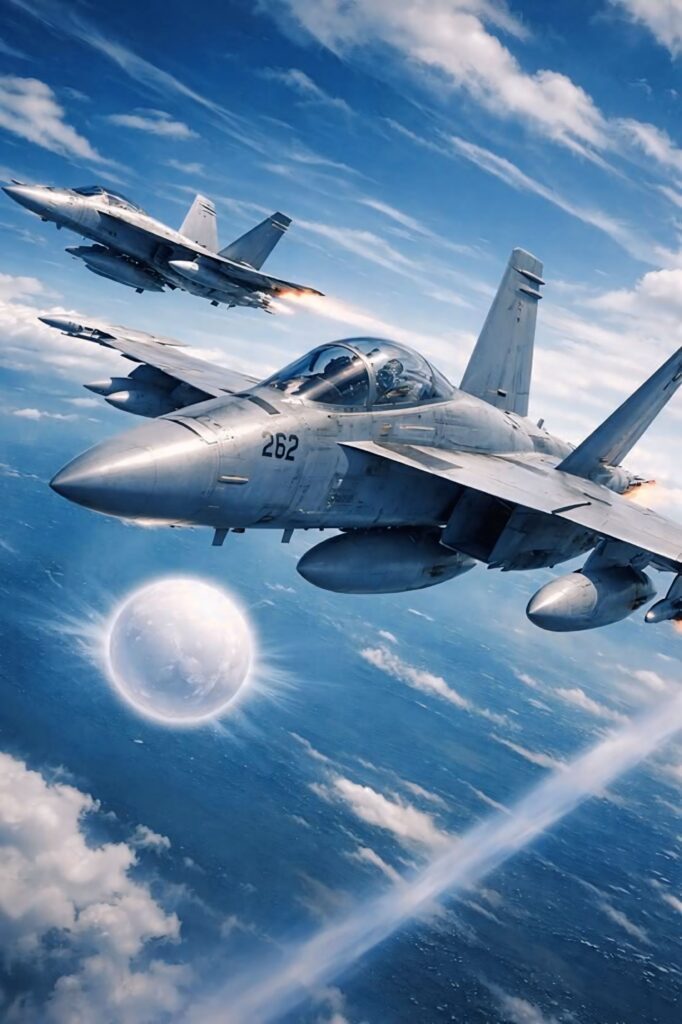
The incident often referred to as “USA–USS Roosevelt UAP (2)” centers on a series of unexplained aerial encounters involving pilots from the USS Theodore Roosevelt during operations off the eastern coast of the United States in 2014–2015. These encounters became one of the most widely discussed cases involving what the U.S. government now calls Unidentified Aerial Phenomena, replacing the older term UFO.
Pilots flying advanced fighter jets, including the F/A-18 Super Hornet, began detecting unknown objects on their radar systems after upgrades enhanced tracking sensitivity. Initially dismissed as technical glitches, these contacts soon proved persistent and puzzling. The objects appeared at hypersonic speeds, performed sudden maneuvers, and operated at altitudes far beyond the normal range of conventional aircraft or drones.
One of the most notable witnesses, Ryan Graves, reported that these objects were observed almost daily for months. According to his account, the UAPs could hover motionless against strong winds, accelerate instantly, and lacked visible propulsion systems or wings. In one incident, a near mid-air collision occurred when a UAP passed between two jets, forcing pilots to take evasive action.
What made the Roosevelt encounters particularly significant was the combination of sensor data and human observation. The objects were tracked not only by radar but also by infrared targeting systems. In some cases, pilots visually confirmed what their instruments detected, strengthening the credibility of the reports. This multi-sensor confirmation set the Roosevelt incidents apart from many earlier UFO sightings, which often relied on a single source of evidence.
The U.S. Department of Defense later acknowledged the authenticity of several videos captured during these encounters. These clips, widely circulated in the media, show fast-moving objects with unusual flight characteristics that remain unexplained. While the Pentagon has stopped short of attributing these phenomena to extraterrestrial origins, officials have admitted that the objects demonstrate capabilities not currently understood within known aerospace technology.
The Roosevelt UAP incidents also played a role in shifting how such phenomena are treated within government and military circles. Historically, reports of UFOs were often stigmatized, discouraging pilots from speaking openly. However, the frequency and consistency of these encounters prompted changes in reporting procedures. The U.S. Navy introduced new guidelines to encourage pilots to document unusual sightings without fear of ridicule or career impact.
From a national security perspective, the encounters raised serious questions. If these objects represent advanced technology from a foreign adversary, it would signal a major gap in U.S. defense capabilities. On the other hand, if they are natural or unknown atmospheric phenomena, they still pose a potential hazard to aviation safety. Either possibility underscores the need for further investigation.
In conclusion, the USS Roosevelt UAP encounters marked a turning point in the modern discussion of unidentified aerial phenomena. With credible witnesses, verified sensor data, and official acknowledgment, the incidents moved the topic from the fringe into serious policy and scientific consideration. Despite ongoing investigations, the true nature of these objects remains unresolved, continuing to challenge current understanding of physics, technology, and aerial operations.