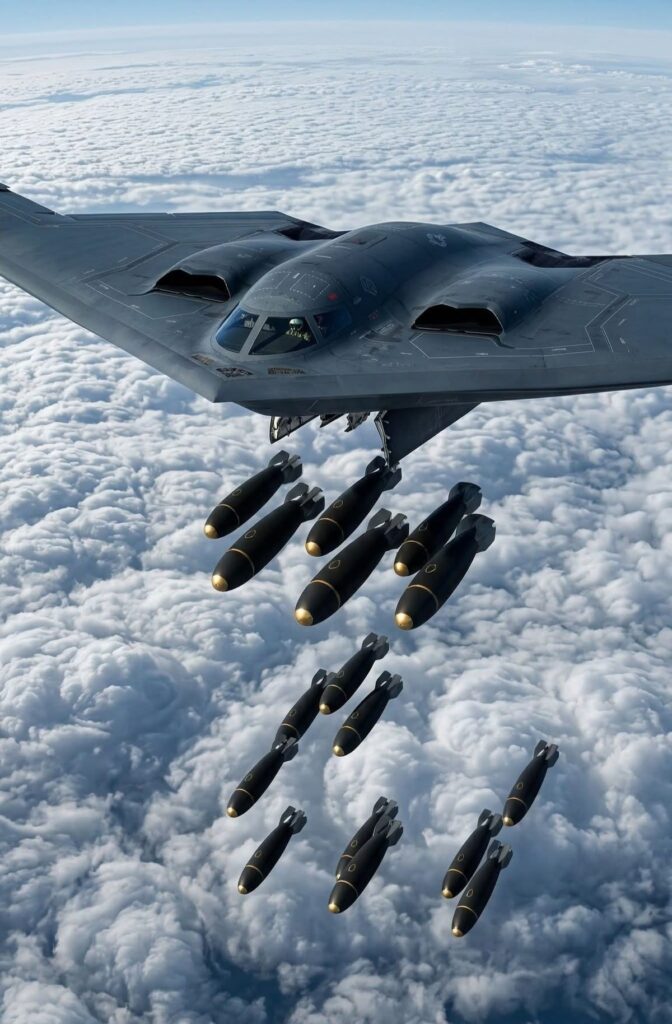
The B-2 Spirit is one of the most advanced and recognizable military aircraft ever built, symbolizing a major leap in aviation technology and modern warfare. Developed by Northrop Grumman for the United States Air Force, the B-2 was designed during the Cold War to penetrate heavily defended enemy airspace and deliver both conventional and nuclear payloads with precision.
What sets the B-2 Spirit apart is its stealth capability. Unlike traditional aircraft, the B-2 features a distinctive flying wing design with no visible fuselage or tail. This shape, combined with advanced radar-absorbing materials, allows it to evade radar detection, making it extremely difficult for enemy defense systems to track or intercept. Its low observable technology means it can operate deep within hostile territory without being easily detected, giving it a strategic advantage unmatched by most other bombers.
The aircraft first flew in 1989 and officially entered service in 1997. Despite its age, the B-2 remains highly relevant due to continuous upgrades in avionics, weapons systems, and communications. Only 21 units were ever produced, largely because of its enormous cost. Each aircraft is estimated to cost over $2 billion when factoring in development expenses, making it one of the most expensive aircraft in history.
In terms of performance, the B-2 has an impressive range of over 6,000 nautical miles without refueling and can reach high subsonic speeds. With aerial refueling, it can conduct missions anywhere in the world. This global reach was demonstrated in operations such as those in Kosovo, Afghanistan, and Iraq, where B-2 bombers flew directly from bases in the United States to strike targets across the globe, then returned without landing.
The payload capacity of the B-2 is another key strength. It can carry up to 40,000 pounds of weapons, including precision-guided bombs and nuclear ordnance. Its internal weapons bays help maintain its stealth profile, as external weapons would increase radar visibility. The bomber has been used in both strategic and tactical roles, capable of striking high-value targets such as command centers, air defenses, and infrastructure with remarkable accuracy.
However, the B-2 Spirit is not without its challenges. Maintenance is complex and costly, particularly due to the sensitive stealth coating that requires careful handling and frequent upkeep. Weather conditions, especially humidity and temperature changes, can impact the aircraft’s outer surface, requiring climate-controlled hangars for storage and servicing.
Despite these limitations, the B-2 remains a cornerstone of U.S. air power. It represents a blend of cutting-edge engineering, strategic flexibility, and unmatched stealth capability. As newer aircraft like the B-21 Raider are developed, the B-2 continues to serve as a critical component of long-range strike operations.
In many ways, the B-2 Spirit is more than just a bomber. It is a statement of technological dominance and a reminder of how innovation can reshape the nature of warfare. Even decades after its introduction, it continues to stand as one of the most formidable aircraft ever to take to the skies.