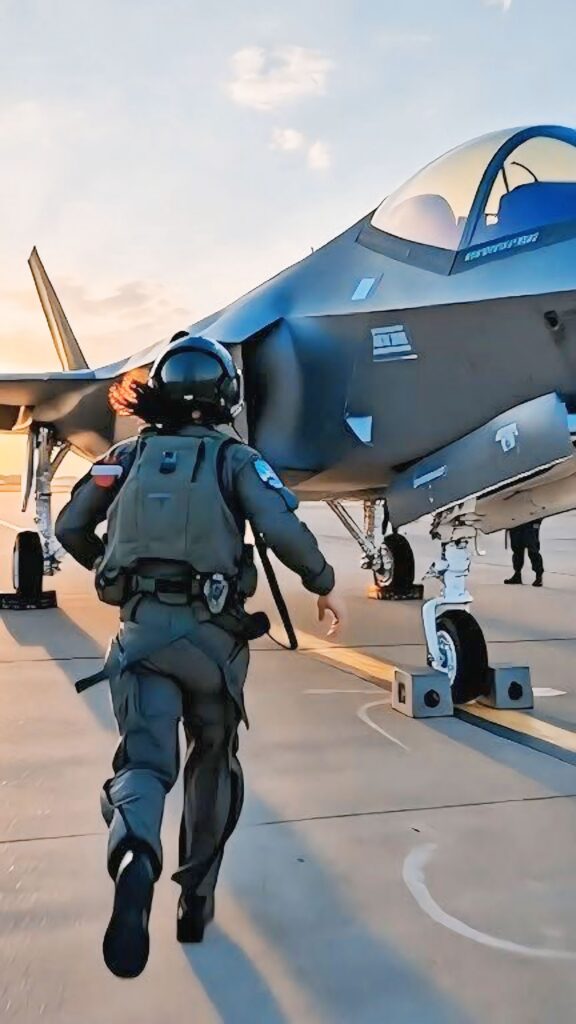
The F-35 Fighter, officially known as the F-35 Lightning II, is one of the most advanced combat aircraft ever built. Developed by Lockheed Martin, it was designed to meet the needs of modern warfare where information, speed, and adaptability matter as much as raw firepower. Unlike earlier fighter jets that focused mainly on air-to-air combat, the F-35 was created as a multirole aircraft capable of performing a wide range of missions in complex and contested environments.
One of the defining features of the F-35 is its stealth capability. Its shape, materials, and internal weapons bays are designed to reduce radar detection, allowing it to operate deep inside hostile airspace. This gives pilots a critical advantage, as they can detect and engage targets before being seen themselves. Stealth is not absolute, but the F-35 significantly lowers the risk of detection compared to older generation aircraft.
Another major strength of the F-35 is its sensor fusion. The aircraft is equipped with an advanced suite of sensors, including radar, infrared cameras, and electronic warfare systems. What makes the F-35 unique is how it combines all this data into a single, clear picture for the pilot. Instead of managing separate screens and systems, the pilot receives integrated information through a helmet-mounted display. This improves situational awareness and reduces decision time in combat.
The F-35 comes in three main variants, each designed for different military needs. The F-35A is a conventional takeoff and landing version used by air forces. The F-35B can take off over short distances and land vertically, making it suitable for use on smaller ships and forward bases. The F-35C is designed for aircraft carrier operations, with larger wings and stronger landing gear. This flexibility allows multiple branches of the military, as well as allied nations, to operate a common platform.
Despite its advanced capabilities, the F-35 program has faced criticism. The aircraft is expensive to develop, buy, and maintain. Technical challenges and delays during development raised concerns about cost and reliability. Over time, many of these issues have been addressed, and ongoing upgrades continue to improve performance and reduce operating costs. Still, debates about affordability and long-term value remain.
Beyond its technical features, the F-35 plays an important strategic role. It is used by many allied countries, which strengthens military cooperation and interoperability. Shared training, maintenance, and data systems allow different air forces to operate together more effectively. In this way, the F-35 is not just a fighter jet but part of a broader defense network.
In summary, the F-35 Fighter represents a shift in how air combat is approached. It combines stealth, advanced sensors, and multirole flexibility into a single platform. While it is not without controversy, the F-35 has become a central element of modern air power and is likely to remain so for decades to come.