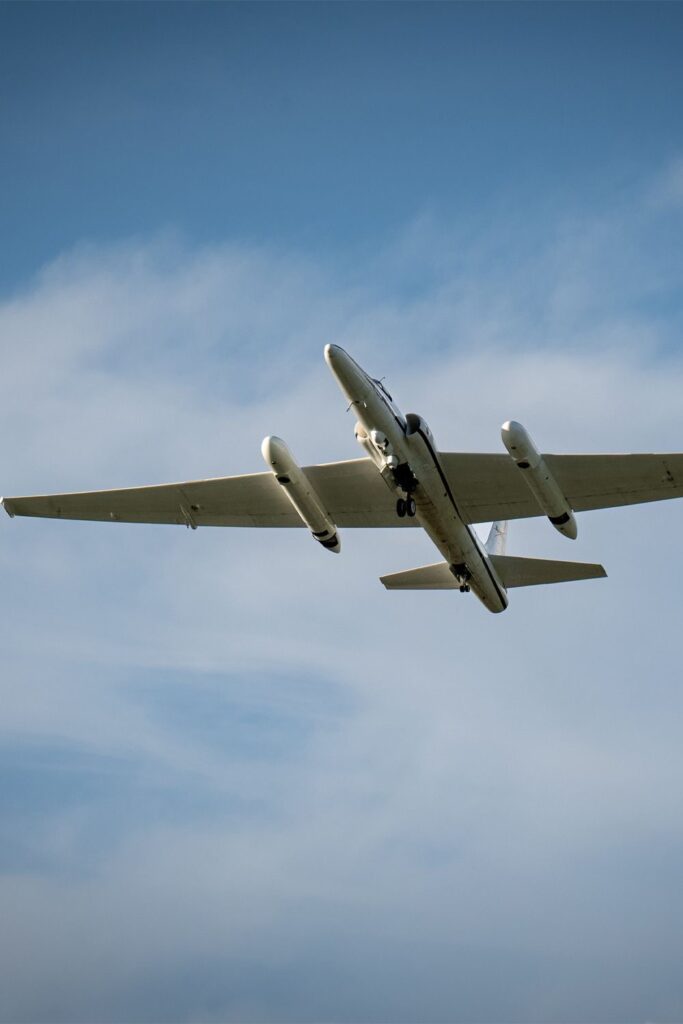
The NASA ER-2 is a specialized high altitude research aircraft that plays a quiet but vital role in Earth and atmospheric science. At first glance it looks sleek and simple, but its true value lies in where it can fly and what it can measure. Operating at altitudes above 60,000 feet, the ER-2 allows scientists to study parts of the atmosphere that are difficult or impossible to reach with conventional aircraft.
The ER-2 is based on the U-2, a platform originally designed for long range reconnaissance. NASA adapted this proven design for scientific missions, replacing military equipment with advanced sensors and research instruments. From this extreme altitude, the ER-2 flies above most clouds and weather, giving researchers a clear and stable view of Earth below and the upper layers of the atmosphere around it.
One of the aircraft’s main strengths is its ability to simulate satellite observations. Many of the instruments carried by the ER-2 are similar to those used on satellites, but with one key advantage. They can be tested, calibrated, and refined during real flight missions before being committed to space. This helps reduce risk and improves the accuracy of future satellite missions. Scientists can also directly compare ER-2 data with satellite data taken at the same time, which improves confidence in long term climate records.
The ER-2 supports a wide range of research areas. It has been used to study ozone chemistry, air pollution, cloud formation, hurricanes, wildfires, and polar ice. During hurricane missions, the aircraft flies above the storm, collecting detailed measurements of cloud structure, moisture, and temperature. This data helps researchers understand how hurricanes form and intensify, which can improve forecasting models.
Inside the aircraft, the pilot operates in a pressurized suit similar to those worn by astronauts. This is necessary because the ER-2 flies at altitudes where the air is too thin to support human life. Missions can last six to eight hours, demanding a high level of focus and endurance. Despite the challenges, the aircraft’s long range and endurance make it ideal for extended scientific campaigns.
Another important role of the ER-2 is international and interagency cooperation. NASA often works with universities, other government agencies, and international partners. The data collected is shared widely, supporting global research efforts and helping scientists build a more complete picture of how Earth’s systems interact.
Although newer technologies such as drones and satellites continue to advance, the ER-2 remains highly relevant. Its flexibility, reliability, and unique flight envelope give it capabilities that few other platforms can match. It can be quickly reconfigured with new instruments and deployed to different parts of the world as research priorities change.
In many ways, the NASA ER-2 acts as a bridge between ground based studies and space missions. Quietly flying at the edge of space, it continues to provide critical data that deepens our understanding of Earth, its atmosphere, and the forces shaping our planet.