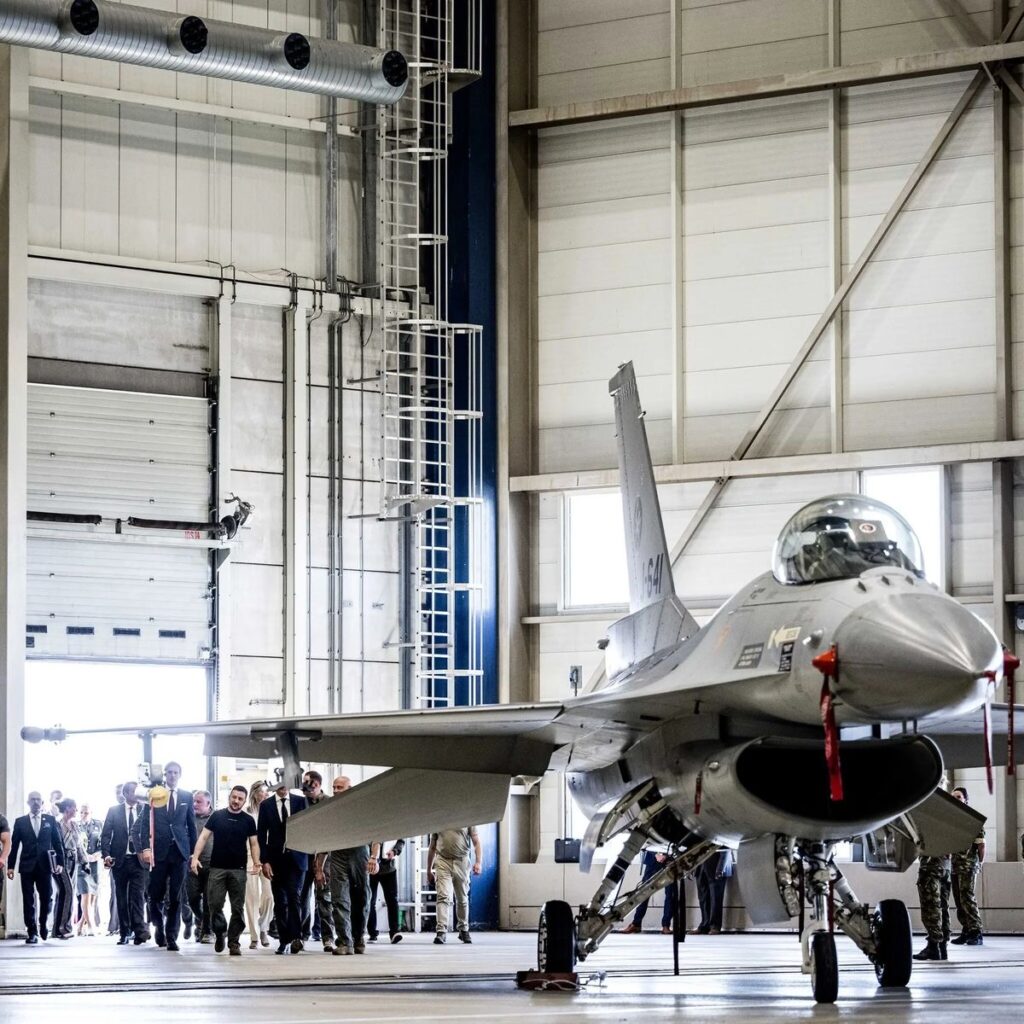
Ukraine’s air force is set to undergo a major shift with the delivery of F-16 fighter jets from Denmark and the Netherlands. This move marks one of the most significant upgrades to Ukraine’s military capabilities since the start of the war and reflects a deeper level of Western commitment to Kyiv’s long-term defense.
For decades, Ukraine relied on Soviet-designed aircraft such as the MiG-29 and Su-27. While these jets have been flown with skill and determination, they face limits in range, radar performance, weapons integration, and maintenance under modern combat conditions. The F-16, by contrast, is a multirole fighter designed for flexibility. It can conduct air-to-air combat, strike ground targets with precision-guided munitions, and integrate smoothly into NATO-style command and control systems.
Denmark and the Netherlands have both operated the F-16 for years but are now transitioning to the newer F-35. This transition created an opportunity to transfer older but still capable aircraft to Ukraine. The decision was not immediate. It followed months of debate among NATO allies about escalation risks, training timelines, and logistical challenges. The final agreement signals a clear political choice: helping Ukraine defend its airspace is seen as essential rather than provocative.
The aircraft alone, however, are only part of the story. Training Ukrainian pilots has been a central challenge. Flying the F-16 requires not just basic flight skills but mastery of advanced avionics, radar systems, and Western combat tactics. Denmark, the Netherlands, and other partner nations have been involved in accelerated training programs to prepare Ukrainian pilots and ground crews. Maintenance personnel are just as important as pilots, since the F-16 relies on complex support systems to remain operational.
Once deployed, the F-16s are expected to improve Ukraine’s ability to contest the airspace. They can help intercept cruise missiles and drones, support ground forces, and carry modern Western weapons that Ukraine previously could not use from its Soviet-era jets. While the F-16 will not automatically guarantee air superiority, it narrows the gap and complicates Russian air operations.
The political message is equally important. By supplying advanced fighters, Denmark and the Netherlands are signaling that support for Ukraine is not temporary or symbolic. It is structural and long-term. This also sets a precedent for other countries with surplus F-16s, potentially expanding the size of Ukraine’s future fleet.
There are still limits and risks. Airfields, logistics hubs, and aircraft on the ground will remain targets. Integrating the F-16 into an ongoing war is far more complex than introducing it during peacetime. Even so, the transfer represents a turning point. It shifts Ukraine closer to Western military standards and strengthens its position both on the battlefield and at the negotiating table.
In practical and symbolic terms, the arrival of F-16s from Denmark and the Netherlands marks a new phase in Ukraine’s defense effort, one focused on endurance, modernization, and deeper integration with its European partners.