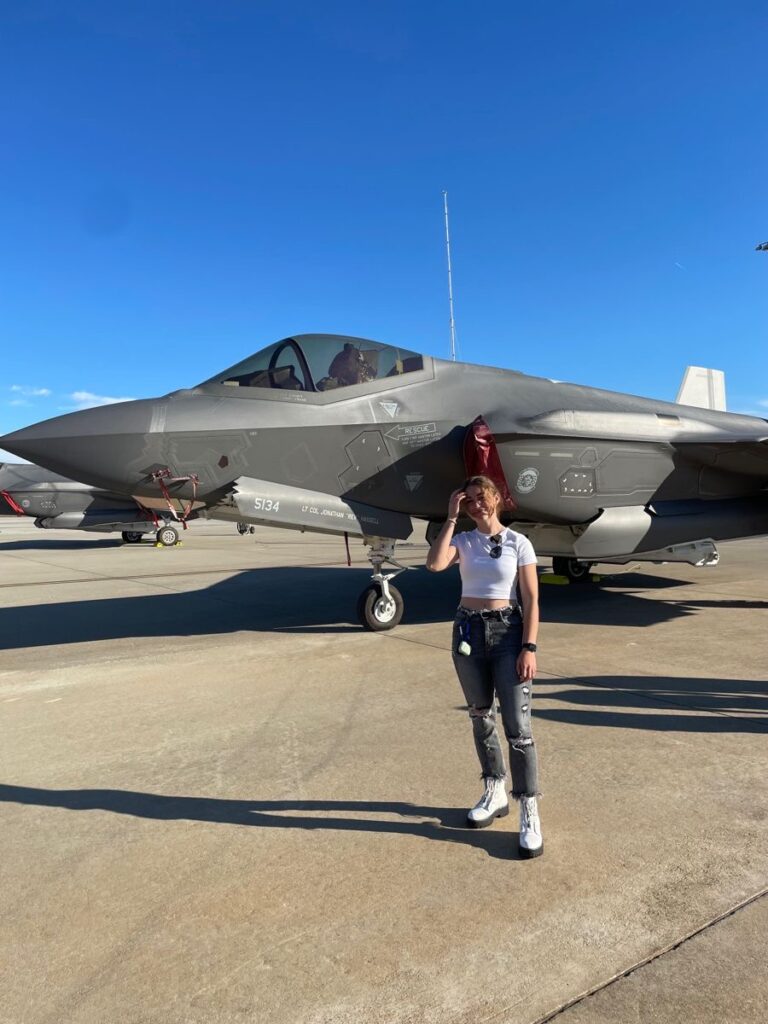
The F-35 Lightning II represents a new way of thinking about air combat. It is not just a fighter aircraft built to win dogfights, but a complex fighting system designed to dominate modern battlefields where information, speed, and coordination matter as much as raw firepower. When people talk about F-35 fighting, they are really talking about how air combat has evolved in the 21st century.
At its core, the F-35 was built around stealth. Its shape, materials, and internal weapons bays allow it to operate in heavily defended airspace where older fighters would struggle to survive. In a fight, this means the F-35 aims to see the enemy first and strike before being detected. Instead of relying on close-range maneuvers, the aircraft focuses on avoiding engagement until the odds are clearly in its favor. This changes the nature of fighting from reactive to deliberate.
Sensors are where the F-35 truly stands apart. The aircraft combines radar, infrared cameras, electronic warfare systems, and data from other platforms into a single, clear picture for the pilot. In combat, this fusion reduces workload and improves decision-making. The pilot does not need to switch between multiple displays or interpret scattered signals. The aircraft does much of that work automatically, allowing faster and more accurate responses during a fight.
In air-to-air combat, the F-35 is designed to engage from beyond visual range whenever possible. Advanced missiles, combined with stealth and sensor awareness, allow it to target enemy aircraft without revealing its position. If a fight moves closer, the F-35 still has strong maneuvering performance and a helmet-mounted display that lets the pilot aim weapons simply by looking at the target. While it may not turn as sharply as some older fighters built purely for dogfighting, its overall combat effectiveness remains high.
F-35 fighting is not limited to the air. The aircraft plays a major role in air-to-ground operations, supporting troops and striking high-value targets. Precision-guided weapons allow it to destroy defenses, command centers, and infrastructure with minimal collateral damage. Its ability to gather and share real-time intelligence also helps ground and naval forces make better decisions during combat operations.
Another key element of F-35 fighting is teamwork. The aircraft is designed to operate as part of a network, sharing information with other aircraft, ships, and ground units. In a conflict, one F-35 might detect a threat, another might launch the weapon, and a third might coordinate with forces on the ground. This cooperative approach increases effectiveness and reduces risk.
In summary, F-35 fighting is less about dramatic close-range battles and more about control, awareness, and precision. It reflects how modern wars are fought, where winning often depends on who understands the battlefield first and acts decisively. The F-35 is not just a fighter. It is a symbol of how air combat has changed.