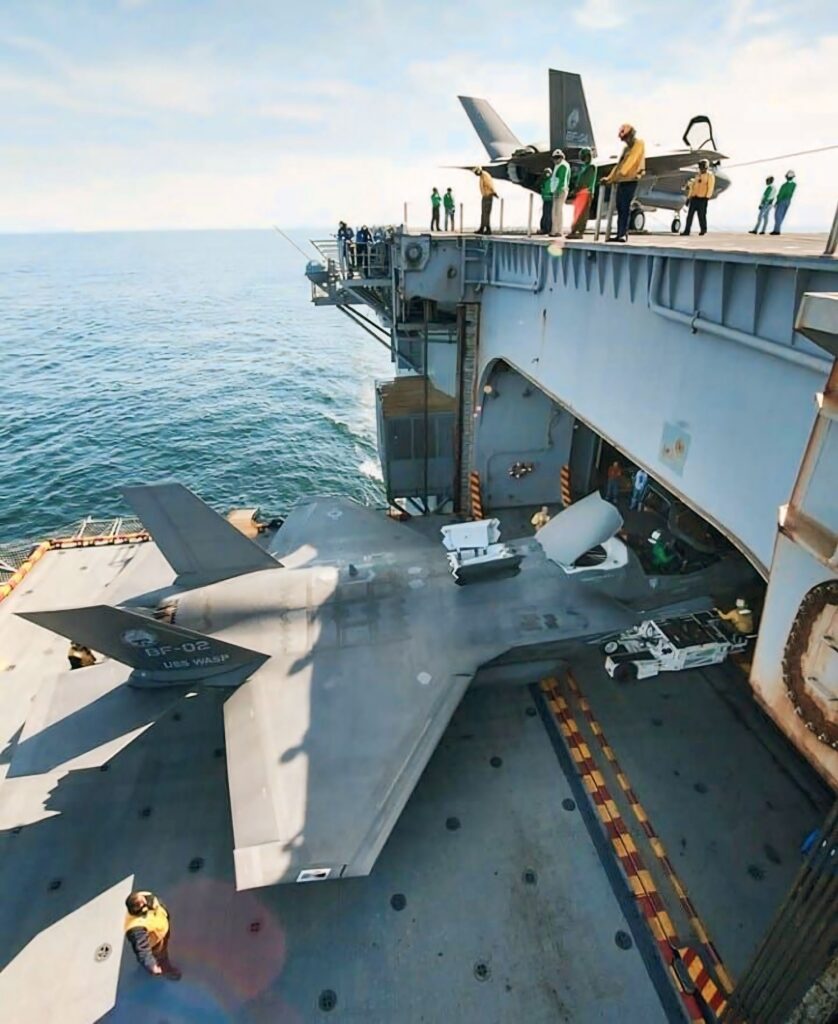
The F-35B Lightning is one of the most advanced fighter aircraft ever developed, designed to meet the demanding needs of modern warfare. As a short takeoff and vertical landing variant of the F-35 program, the F-35B brings a unique combination of flexibility, firepower, and technology to the battlefield. It is primarily operated by the United States Marine Corps, with additional users among allied nations, and it plays a critical role in expeditionary and naval operations.
What sets the F-35B apart from other fighter jets is its ability to operate from short runways and amphibious assault ships. This capability allows it to function in environments where traditional runways are unavailable or damaged. For the Marine Corps, this means air power can be deployed closer to the front lines, supporting ground forces with greater speed and responsiveness. The aircraft’s vertical landing system, powered by a lift fan and rotating engine nozzle, reflects years of engineering focused on operational flexibility.
Beyond its takeoff and landing capabilities, the F-35B is built around stealth. Its design reduces radar visibility, allowing it to penetrate contested airspace with a lower risk of detection. Stealth alone, however, does not define the aircraft. The F-35B integrates advanced sensors that collect and process vast amounts of data in real time. This information is displayed to the pilot in a clear and usable way, improving situational awareness and decision making during complex missions.
The Lightning’s sensor fusion allows it to act as more than just a fighter. It can serve as a node in a larger network, sharing information with other aircraft, ships, and ground units. This ability enhances coordination across joint and allied forces. In many cases, the F-35B can detect threats before they are visible to other platforms, giving commanders valuable time to respond. This makes the aircraft a force multiplier rather than just an individual weapon system.
In terms of combat capability, the F-35B carries a wide range of precision-guided munitions. It can conduct air-to-air combat, strike ground targets, and support close air support missions. The internal weapons bays preserve stealth during high threat operations, while external hardpoints can be used when stealth is less critical. This adaptability allows the aircraft to transition between mission types without sacrificing effectiveness.
The F-35B Lightning also represents a shift in how pilots interact with their aircraft. The cockpit is highly digital, with a helmet-mounted display that replaces traditional heads-up displays. Pilots receive flight data, targeting information, and sensor imagery directly through the helmet, reducing workload and improving reaction time. Training for the F-35B reflects this change, placing strong emphasis on information management alongside flying skills.
While the F-35B program has faced scrutiny and challenges, its operational impact continues to grow as technology matures and experience increases. The aircraft is not just a replacement for older platforms, but a new approach to air combat. The F-35B Lightning stands as a symbol of modern military aviation, combining innovation, versatility, and integration to meet the demands of an evolving global security environment.